Showing posts with label read aloud. Show all posts

Monday, January 4, 2021

2. Pinocchio


Pinocchio. Carlo Collodi. 1883. 160 pages. [Source: Bought]

First sentence: Centuries ago there lived-- "A king!" my little readers will say immediately. No, children, you are mistaken. Once upon a time there was a piece of wood. It was not an expensive piece of wood.

Premise/plot: Pinocchio, as a character, is rotten from the start: selfish, pleasure-loving, foolish, rebellious, ungrateful, disrespectful, slow to learn, slow to listen, slow to change. Living by the motto of if I want to do it, it must be right! Who are you to tell me it's wrong or it's a mistake or I'm hurting someone else!

But Pinocchio doesn't know best, he doesn't "know" much of anything of the world and its many dangers. He knows nothing about consequences natural or supernatural. (There are so many fantasy elements in Pinocchio.)

The Disney movie gives viewers essentially three misadventures (the puppet show ("I've Got No Strings), his running away to toy land (becoming a donkey), and searching for his father and getting swallowed up. The book gives readers about three or four dozen misadventures. 

My thoughts: This is the third time I've read Pinocchio. I wanted to read it after recently watching the Disney movie for the first time in forever--probably twenty or twenty-five years. 

The movie left me with the impression that I am GLAD that God is not like the blue fairy. That while the movie is very moralistic and lesson-driven, it's teaching works-righteousness. In other words, bad behavior is punished and good behavior is rewarded. If you want to become a real boy--you'll have to earn it by works of righteousness. You reap what you sow. 

The movie also gives the impression that temptations come from without. Pinocchio was innocent and naive while in the home. It wasn't until he left his home--to go to school--that he faced temptation and wasn't strong enough to say no. If he'd been homeschooled and never left the safety of his home, would he have ever been naughty? Disney doesn't answer that, of course. But it made me wonder just how short a movie it could have been.

In the book, temptations don't only come from without. In fact, they come from within. (In other words, we sin because we're sinners.) We see this in his creation:

After choosing the name for his Marionette, Geppetto set seriously to work to make the hair, the forehead, the eyes. Fancy his surprise when he noticed that these eyes moved and then stared fixedly at him. Geppetto, seeing this, felt insulted and said in a grieved tone: "Ugly wooden eyes, why do you stare so?"
After the eyes, Geppetto made the nose, which began to stretch as soon as finished. It stretched and stretched and stretched till it became so long, it seemed endless. Poor Geppetto kept cutting it and cutting it, but the more he cut, the longer grew that impertinent nose. In despair he let it alone. Next he made the mouth. "Stop laughing!" said Geppetto angrily; but he might as well have spoken to the wall. "Stop laughing, I say!" he roared in a voice of thunder. The mouth stopped laughing, but it stuck out a long tongue.  "Pinocchio, you wicked boy!" he cried out. "You are not yet finished, and you start out by being impudent to your poor old father. Very bad, my son, very bad!" And he wiped away a tear. The legs and feet still had to be made.
As soon as they were done, Geppetto felt a sharp kick on the tip of his nose. "I deserve it!" he said to himself.
When his legs were limbered up, Pinocchio started walking by himself and ran all around the room. He came to the open door, and with one leap he was out into the street. Away he flew!

Pinocchio wasn't corrupted by bad companions and poor decisions. He was "born" naughty.

Gepetto regretted carving Pinocchio almost from the start! 

While there is a friendly cricket offering advice, Pinocchio KILLS HIM fairly soon after his introduction in the text. He doesn't even survive one page!

"Tell me, Cricket, who are you?" "I am the Talking Cricket and I have been living in this room for more than one hundred years." "Today, however, this room is mine," said the Marionette, "and if you wish to do me a favor, get out now, and don't turn around even once." "Woe to boys who refuse to obey their parents and run away from home! They will never be happy in this world, and when they are older they will be very sorry for it." "Sing on, Cricket mine, as you please. What I know is, that tomorrow, at dawn, I leave this place forever. If I stay here the same thing will happen to me which happens to all other boys and girls. They are sent to school, and whether they want to or not, they must study. As for me, let me tell you, I hate to study! It's much more fun, I think, to chase after butterflies, climb trees, and steal birds' nests."
"Poor little silly! Don't you know that if you go on like that, you will grow into a perfect donkey and that you'll be the laughingstock of everyone?" "Keep still, you ugly Cricket!" cried Pinocchio. But the Cricket, who was a wise old philosopher, instead of being offended at Pinocchio's impudence, continued in the same tone: "If you do not like going to school, why don't you at least learn a trade, so that you can earn an honest living?"
"That of eating, drinking, sleeping, playing, and wandering around from morning till night."
"Let me tell you, for your own good, Pinocchio," said the Talking Cricket in his calm voice, "that those who follow that trade always end up in the hospital or in prison." "Careful, ugly Cricket! If you make me angry, you'll be sorry!" "Poor Pinocchio, I am sorry for you." "Why?" "Because you are a Marionette and, what is much worse, you have a wooden head." Perhaps he did not think he would strike it. But, sad to relate, my dear children, he did hit the Cricket, straight on its head. With a last weak "cri-cri-cri" the poor Cricket fell from the wall, dead!

Pinocchio's greatest gift--if you don't count disobedience or willfulness as gifts--is making excuses and justifying his behavior and beliefs. And also, of course, LYING.


"Boys always promise that when they want something," said Geppetto. "I promise to go to school every day, to study, and to succeed--" "Boys always sing that song when they want their own will." "But I am not like other boys! I am better than all of them and I always tell the truth. I promise you, Father, that I'll learn a trade, and I'll be the comfort and staff of your old age."

VeggieTales offers a better adaptation called Pistachio: The Little Boy that Woodn't. It isn't 100% faithful to the book, mind you. But it is definitely more faithful to the book than the Disney movie. It also does a better job of putting the morals and lessons into context. It is complemented by the PARABLE OF THE PRODIGAL SON and highlights unconditional love. It also has some great lines in it! 


Quotes:

  • "Do you want to double your gold pieces?" "What do you mean?" "Do you want one hundred, a thousand, two thousand gold pieces for your miserable five?" "Yes, but how?" "The way is very easy. Instead of returning home, come with us."
  • As he walked, Pinocchio noticed a tiny insect glimmering on the trunk of a tree, a small being that glowed with a pale, soft light. "Who are you?" he asked. "I am the ghost of the Talking Cricket," answered the little being in a faint voice that sounded as if it came from a far-away world. "What do you want?" asked the Marionette. "I want to give you a few words of good advice. Return home and give the four gold pieces you have left to your poor old father who is weeping because he has not seen you for many a day." "Tomorrow my father will be a rich man, for these four gold pieces will become two thousand." "Don't listen to those who promise you wealth overnight, my boy. As a rule they are either fools or swindlers! Listen to me and go home." "But I want to go on!" "The hour is late!" "I want to go on." "The night is very dark." "I want to go on." "The road is dangerous." "I want to go on." "Remember that boys who insist on having their own way, sooner or later come to grief." "The same nonsense. Good-by, Cricket." "Good night, Pinocchio, and may Heaven preserve you from the Assassins." There was silence for a minute and the light of the Talking Cricket disappeared suddenly, just as if someone had snuffed it out. Once again the road was plunged in darkness.
  • To speak sensibly, I think assassins have been invented by fathers and mothers to frighten children who want to run away at night. And then, even if I were to meet them on the road, what matter? I'll just run up to them, and say, 'Well, signori, what do you want? Remember that you can't fool with me! Run along and mind your business.'
  • "Drink this, and in a few days you'll be up and well." Pinocchio looked at the glass, made a wry face, and asked in a whining voice: "Is it sweet or bitter?" "It is bitter, but it is good for you." "If it is bitter, I don't want it." "Drink it!" "I don't like anything bitter." "Drink it and I'll give you a lump of sugar to take the bitter taste from your mouth." "Where's the sugar?" "Here it is," said the Fairy, taking a lump from a golden sugar bowl. "I want the sugar first, then I'll drink the bitter water." "Do you promise?" "Yes." The Fairy gave him the sugar and Pinocchio, after chewing and swallowing it in a twinkling, said, smacking his lips: "If only sugar were medicine! I should take it every day." "Now keep your promise and drink these few drops of water. They'll be good for you." Pinocchio took the glass in both hands and stuck his nose into it. He lifted it to his mouth and once more stuck his nose into it. "It is too bitter, much too bitter! I can't drink it." "How do you know, when you haven't even tasted it?" "I can imagine it. I smell it. I want another lump of sugar, then I'll drink it."
  • The Fairy sat looking at him and laughing. "Why do you laugh?" the Marionette asked her, worried now at the sight of his growing nose. "I am laughing at your lies." "How do you know I am lying?" "Lies, my boy, are known in a moment. There are two kinds of lies, lies with short legs and lies with long noses. Yours, just now, happen to have long noses." Pinocchio, not knowing where to hide his shame, tried to escape from the room, but his nose had become so long that he could not get it out of the door.
  • I have never obeyed anyone and I have always done as I pleased.
  • "I never should have thought that chick-peas could be so good!" "You must remember, my boy," answered the Pigeon, "that hunger is the best sauce!"
  • "Oh, I'm tired of always being a Marionette!" cried Pinocchio disgustedly. "It's about time for me to grow into a man as everyone else does." "And you will if you deserve it--" "Really? What can I do to deserve it?" "It's a very simple matter. Try to act like a well-behaved child." "Don't you think I do?" "Far from it! Good boys are obedient, and you, on the contrary--" "And I never obey." "Good boys love study and work, but you--" "And I, on the contrary, am a lazy fellow and a tramp all year round." "Good boys always tell the truth." "And I always tell lies." "Good boys go gladly to school." "And I get sick if I go to school. From now on I'll be different." "Do you promise?" "I promise. I want to become a good boy and be a comfort to my father.
  • Where shall I hide? Oh, how much better it would have been, a thousand times better, if only I had gone to school! Why did I listen to those boys? They always were a bad influence! And to think that the teacher had told me--and my mother, too!--'Beware of bad company!' That's what she said. But I'm stubborn and proud. I listen, but always I do as I wish. And then I pay. I've never had a moment's peace since I've been born! Oh, dear! What will become of me? What will become of me?"
  • The boy's real name was Romeo, but everyone called him Lamp-Wick, for he was long and thin and had a woebegone look about him. Lamp-Wick was the laziest boy in the school and the biggest mischief-maker, but Pinocchio loved him dearly.
  • "And where are you going?" "To a real country--the best in the world--a wonderful place!" "What is it called?" "It is called the Land of Toys. Why don't you come, too?" "I? Oh, no!" "You are making a big mistake, Pinocchio. Believe me, if you don't come, you'll be sorry. Where can you find a place that will agree better with you and me? No schools, no teachers, no books! In that blessed place there is no such thing as study. Here, it is only on Saturdays that we have no school. In the Land of Toys, every day, except Sunday, is a Saturday. Vacation begins on the first of January and ends on the last day of December. That is the place for me! All countries should be like it! How happy we should all be!"
  • "But I don't want to be digested," shouted Pinocchio, starting to sob. "Neither do I," said the Tunny, "but I am wise enough to think that if one is born a fish, it is more dignified to die under the water than in the frying pan." "What nonsense!" cried Pinocchio. "Mine is an opinion," replied the Tunny, "and opinions should be respected."
  • "Bravo, Pinocchio! In reward for your kind heart, I forgive you for all your old mischief. Boys who love and take good care of their parents when they are old and sick, deserve praise even though they may not be held up as models of obedience and good behavior. Keep on doing so well, and you will be happy."           

© 2021 Becky Laney of Young Readers

Friday, December 18, 2020

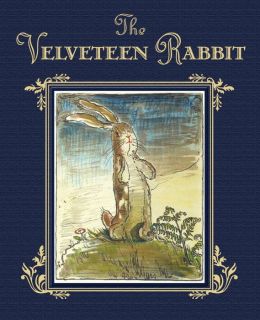
124. The Velveteen Rabbit

The Velveteen Rabbit. Margery Williams. Illustrated by William Nicholson. 1922/2014. Random House. 48 pages. [Source: Review copy]

Do you know what it is to be real? One little Christmas bunny will learn this and plenty of other life lessons in Margery Williams' classic tale The Velveteen Rabbit.

The Velveteen Rabbit opens with a young boy receiving a rabbit for a Christmas present. All is lovely for the rabbit that first day. But the toy is quickly forgotten. He becomes one toy of many, many, many toys. He's not exactly special to the boy or the other toys. In fact, I'd say the other toys bully him a bit. All except for the Skin Horse, the oldest toy in the nursery. It is this horse that tells the Rabbit all about being real, what it takes to be real, what it feels like, how it changes you, etc.
"Real isn't how you are made," said the Skin Horse. "It's a thing that happens to you. When a child loves you for a long, long time, not just to play with, but REALLY loves you, then you become Real." "Does it hurt?" asked the Rabbit. "Sometimes," said the Skin Horse, for he was always truthful. "When you are Real you don't mind being hurt." "Does it happen all at once, like being wound up," he asked, "or bit by bit?" "It doesn't happen all at once," said the Skin Horse. "You become. It takes a long time. That's why it doesn't often happen to people who break easily, or have sharp edges, or who have to be carefully kept. Generally, by the time you are Real, most of your hair has been loved off, and your eyes drop out and you get loose in the joints and very shabby. But these things don't matter at all, because once you are Real you can't be ugly, except to people who don't understand." "I suppose you are real?" said the Rabbit. And then he wished he had not said it, for he thought the Skin Horse might be sensitive. But the Skin Horse only smiled. "The Boy's Uncle made me Real," he said. "That was a great many years ago; but once you are Real you can't become unreal again. It lasts for always." (5-8)
The Velveteen Rabbit is one of my favorite Christmas books. I love the nursery magic. I love the ending. It was originally published in 1922. The story and illustrations in this edition are original. This is a beautiful edition of the book. One of the best I've seen.

The Velveteen Rabbit was published several years before A.A. Milne's Winnie the Pooh and House at Pooh Corner. Chances are if you enjoy one, you'll enjoy the other.

Do you have a favorite toy-come-to-life fantasy?


© 2020 Becky Laney of Young Readers

Friday, January 19, 2018

McBroom's Ghost

McBroom's Ghost Sid Fleischman. Illustrated by Robert Frankenberg. 1971. 48 pages. [Source: Bought]

First sentence:  Ghosts? Mercy, yes--I can tell you a thing or three about ghosts. As sure as my name's Josh McBroom a haunt came lurking about or wonderful one-acre farm. I don't know when that confounded dry-bones first moved in with us, but I suspicion it was last winter. An uncommon cold winter it was, too, though not so cold that an honest man would tell fibs about it. Still, you had to be careful when you lit a match. The flame would freeze and you had to wait for a thaw to blow it out.

Premise/plot: Does McBroom's one-acre farm have a ghost? Perhaps. This read-aloud gem takes place over two winters, I believe. In this one, McBroom has to solve the mystery of is-there-a-ghost-haunting-the-farm? AND solve a problem he is having with his neighbor and his hogs.

My thoughts: I would recommend this one to anyone who has read and loved McBroom's Wonderful One-Acre Farm, Three Tall Tales (1966). I love, love, love McBroom as a narrator. And the adventures he has with his family on the farm are quite unbelievable.

Quotes:
I don't intend to stray from the facts, but I distinctly remember one day Polly dropped her comb on the floor and when she picked it up the teeth were chattering. 
The temperature kept dropping and I must admit some downright unusual things began to happen. For one thing smoke took to freezing in the chimney. I had to blast it out with a shotgun three times a day. And we couldn't sit down to a bowl of Mama's hot soup before a crust of ice formed on top. The girls used to set the table with a knife, a fork, a spoon--and an ice pick. 
Then the big freeze set in. Red barns for miles around turned blue with the cold. 


© 2018 Becky Laney of Young Readers

Tuesday, October 4, 2011

The Bippolo Seed And Other Lost Stories

The Bippolo Seed and Other Lost Stories by Dr. Seuss. 2011. Random House. 72 pages.

I love Dr. Seuss. I do. And I was oh-so-happy to discover that Random House was publishing a new collection of Dr. Seuss stories. These seven 'lost' stories were originally published in magazines in the early 1950s.

The seven stories are:

The Bippolo Seed
The Rabbit, the Bear, and the Zinniga-Zanniga
Gustav, the Goldfish
Tadd and Todd
Steak for Supper
The Strange Shirt Spot
The Great Henry McBride

I enjoyed almost all of these stories.

The Bippolo Seed is about greed. A duck finds a magical seed. He's told to make a wish and plant the seed. But before he can make a wish--a practical, simple wish--a cat stops him. He must want more than just a week's worth of food. How unimaginative a wish is that after all? So with a little encouragement, this duck named McKluck gets a little out of control. 

The Rabbit, The Bear, and the Zinniga-Zanniga is about a rabbit NOT wanting to become the bear's dinner. The rabbit has to think quickly to make sure that does not happen! But it's not enough for the rabbit to manage an escape, it has to be done in style!

Gustav, The Goldfish. It didn't take me long to recognize that this was FISH OUT OF WATER. What I didn't know was that this story inspired it. And that the author of A Fish Out of Water was Dr. Seuss's first wife, Helen Palmer. Seuss' story rhymed, Palmer's didn't. But essentially the same story about a boy and a fish and the importance of following directions very very carefully!

Tadd and Todd is a story about twins. One of the twins just loves to look exactly like his brother. The other twin isn't quite so pleased. In fact one of the brothers will do just about anything to be different. But that isn't always easy. I liked this one because it used the phrase: "which one was what one, and what one was who." It is an outlandish tale, of course. And it just gets more and more elaborate...what one brother will do to stand out from his brother. So it's enjoyable.

Steak for Supper introduces some fun animal-like characters--much like Wocket in My Pocket. It introduces the Ikka, the Gritch, the Grickle, the Nupper, and the Wild Wheef. The moral of this one is don't brag too much...you see, the little boy was going around saying that he had steak to eat every Saturday night. Well, one Saturday, these fanciful creatures decide to join him because they want steak too! Of course, the little boy doesn't know how he'll ever explain all this to his parents...

The Strange Shirt Spot is a very interesting story in that it introduces the idea of a spot that just WON'T go away. It is the inspiration, if inspiration is the right word, for the pink cat ring in The Cat in the Hat Comes Back. The spot even gets on some of the same things.

The Great Henry McBride celebrates imagination and daydreaming. In this case a little boy dreams about what he wants to be when he grows up...

© 2011 Becky Laney of Young Readers
Monday, October 3, 2011

Toys Come Home

Toys Come Home. Emily Jenkins. Illustrated by Paul O. Zelinsky. 2011. Random House. 144 pages.

StingRay has missed the birthday party. She didn't mean to. It was her first party, first party ever in the world to be invited to--and she missed it. She didn't even know she was missing it. She didn't know anything about the party until now, when it is already over. 

The full title of this delightful prequel is "Being the Early Experiences of An Intelligent Stingray, A Brave Buffalo, and a Brand-New Someone Called Plastic." Of course, if you've read Toys Go Out and Toy Dance Party, you know all about Stingray, Lumphy, and Plastic. But what you may not know is how they all three came to belong to the Little Girl.

I love the premise of this one. I do. I definitely wanted more stories about these three friends. And these 'early' stories are just perfect!!! The six stories:

In Which There Is Nowhere Nice To Sleep
The Story of an Ear
What Happened to Bobby Dot
You Can Puke On Me
In Which Lumphy is Brave With a Tuna Casserole
The Arrival of Plastic, and Also The Reason We Are Here

The main character of this one happens to be Stingray. In the first story, we learn of how she arrived too late for the little girl's birthday party, but just in time to arrive on the ACTUAL birthday. As a new toy, she hasn't really found her place in the bedroom just yet. She's getting acquainted with the other toys, the other stuffed animals. She's learning--observing--everything.

Two new characters introduced are Sheep (was Sheep in the other two books? Have I forgotten?) and Bobby Dot. There's a good reason why Bobby Dot, the walrus, is NOT in the later books. At first, I wasn't exactly sure why Bobby Dot's story is included in Toys Come Home. Then I thought about it and thought about it some more. Things like that just happen. Not to be overly dramatic, but that's just a toy's life. And I definitely liked how that story is REDEEMED with a very familiar character, Lumphy.

It was so much fun to see the Little Girl shopping. There's just something oh-so-true about these books. In this one, one of the things I loved was HOW very individual the toys were. How when she was shopping she just knew, she just could tell, which (stuffed) ANIMAL was for her. Because the toys are so very-very real to her. Maybe not every reader can relate. But I can!!!

So some of the stories are just good fun, and one or two are slightly more serious. (Though not as tragically sentimental as say The Velveteen Rabbit).

© 2011 Becky Laney of Young Readers
Tuesday, July 5, 2011

Grump

Grump. Janet Wong. Illustrated by John Wallace. 2001. Simon & Schuster. 32 pages.

Look how tired this Mommy is
Tired and frumpy
Grouchy chumpy
Oh, what a grump!


Look at Baby
Smart, good Baby
Happy Baby
Making gravy
Applesauce and ketchup gravy
Not too lumpy
Not too bumpy
Squish squish
DUMP!

Grump is one of my favorite, favorite, favorite books. I almost don't even need to make the qualification of favorite picture book. It's a book that begs to be read aloud again and again and again. The rhythm of it is almost magical--at least to me! I love the use of language, I do. I love the way it sounds, the way it feels on my tongue. It's real life. It's poetry. It just works.

The story of this one is simple. It's been a LONG, LONG, LONG day for this Mom and her Baby. And even if the Baby doesn't think he needs a nap, he needs a nap. But will this baby go down for a nap? Not without an all-too-familiar-struggle!

Baby's going to take a nap now
Take a nap now
Little lump.

She puts him in his crib and...

And oh of course that baby cries
Cries and whimpers
Cries and whimpers
Cries and whimpers
Play with me!
So Mommy sits 
And reads to Baby
Reads so pretty
Reads so softly
Reads and reads and reads until--

Can you guess what happened to the oh-so-tired, oh-so-grumpy Mommy?

This one is such a GREAT book. I loved how true-to-life it was. Not only for the baby, not only for the mommy--but it captures the ups and downs of the whole relationship.

This one has been a favorite going on ten years. Today I was looking to review some board books, hoping to find something great to share with you, when I thought again of Grump. Why isn't Grump still in print? Why hasn't it been reprinted? Why??? It's just a WONDERFUL book. And it would be a great board book!!! The combination of this story with that format would be just perfect!!!!

© 2011 Becky Laney of Young Readers
Tuesday, August 10, 2010

Curious George Storybook Collection


Curious George Storybook Collection. 2010. September 2010. Houghton Mifflin Harcourt. 197 pages.

The eight stories in the Curious George Storybook Collection are adaptations of episodes of the television show. Included in this compilation:
  • Curious George: The Donut Delivery (Adapted by Monica Perez, Teleplay by Joe Fallon, 2006)
  • Curious George: Snowy Day (Adapted by Rotem Moscovich, Teleplay by Lazar Saric, 2007)
  • Curious George: The Surprise Gift (Adapted by Erica Zappy, Teleplay by Raye Lankford, 2008)
  • Curious George: The Boat Show (Adapted by Kate O'Sullivan, Teleplay by Raye Lankford, 2008)
  • Curious George: Builds a Home (Adapted by Monica Perez, Teleplay by Joe Fallon, 2006)
  • Curious Geoge: Lost and Found (Adapted by Erica Zappy, Teleplay by Joe Fallon, 2008)
  • Curious George: Plays Mini Golf (Adapted by Marcy Goldberg Sacks, Teleplay by Craig Miller, 2008)
  • Curious George: Tadpole Trouble (Adapted by Mark London Williams, Teleplay by Bruce Akiyama, 2007)
If you enjoy the TV show, then you'll probably enjoy reading this storybook collection. Each book has extension activities. For example, you can learn to make a paper boat in Curious George The Boat Show or a paper snowflake in Curious George Snowy Day.

My favorite story is The Donut Delivery! Here is how that story begins,
"George is always a good monkey--when he's asleep. But no monkey wants to sleep through Saturday. This was a Saturday that cried out for something special..."
© Becky Laney of Young Readers
Monday, August 9, 2010

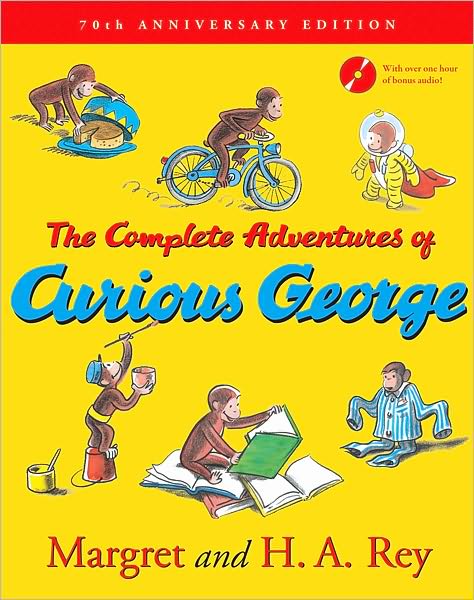
The Complete Adventures of Curious George


Complete Adventures of Curious George: 70th Anniversary Edition. Margret and H.A. Rey. 2010. Houghton Mifflin Harcourt. 432 pages.

This anthology contains these original stories:
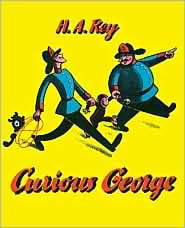
  • Curious George, (1941)
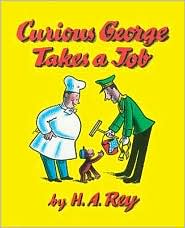
  • Curious George Takes a Job, (1947)
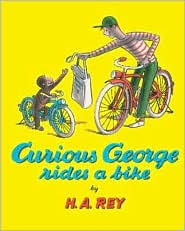
  • Curious George Rides a Bike, (1952)
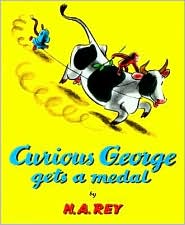
  • Curious George Gets A Medal, (1957)
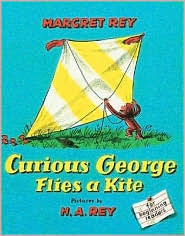
  • Curious George Flies A Kite, (1958)
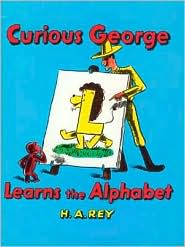
  • Curious George Learns the Alphabet, (1963)
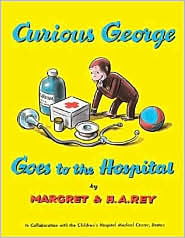
  • Curious George Goes to the Hospital (1966)
It also contains an introduction by Leonard S. Marcus, a publisher's perspective on Curious George, a retrospective essay, and a photographic album of Margret and H.A. Rey.

My thoughts on Curious George (1941):
This is George.
He lived in Africa.
He was a good little monkey
and always very curious.
One day George saw a man.
He had on a large yellow straw hat.
The man saw George too.
"What a nice little monkey," he thought.
"I would like to take him home with me."
The first adventure has George being taken from his happy jungle home by the man in the yellow hat. We're told that George--after the ocean voyage--will live in the zoo. My question is why is the man in the yellow hat so intent on taking George with him if he's just going to be put into the zoo?! Is that the man in the yellow hat's job? To find animals in his travels and place them into zoos? It would make more sense if he wanted George as a pet. George does end up in the zoo. Eventually. But it's a busy couple of days first! He smokes a pipe, phones the fire department, spends time in prison, escapes from prison, and goes on quite an exciting balloon ride.

My thoughts on Curious George Takes A Job (1947)
This is George. He lived in the Zoo. He was a good little monkey and always very curious. He wanted to find out what was going on outside the Zoo. One day, when the keeper was not paying attention, George got hold of the key for the cage. When the keeper discovered what had happened, it was too late--George was gone!
I'm curious how much time has passed (for George) in between books. Has he been in the Zoo long before he makes his escape? (That's something I never thought of as a child!) This second book chronicles George's adventures in the city. Curious George does several "jobs" throughout the book including spending time as a dishwasher in an Italian restaurant, a window washer, a painter (though this one leads him to trouble), and an actor. Poor George also breaks his leg and gets sick from smelling ether. He does reunite with the man in the yellow hat towards the end of the book...

My thoughts on Curious George Rides a Bike (1952)
This is George. He lived with his friend, the man with the yellow hat. He was a good little monkey and always very curious. This morning George was curious the moment he woke up because he knew it was a special day...
What makes that day so special? It's the third anniversary of when George and the man in the yellow hat met. George is given a bike and the promise of a show--an animal show. But first George must have his own adventures. Including "helping" someone out on their paper route. But by the end of the day George ends up being in the show. But that reward didn't come easily. George has to get into and out of several messes first...

My thoughts on Curious George Gets a Medal (1957)
This is George. He lived with his friend, the man with the yellow hat. He was a good little monkey -- and always very curious. George was alone this morning, looking at a picture book, when the doorbell rang. It was the mailman. "Here is a letter for you," he said. "Put it on your friend's desk. He'll read it to you when he comes home." George was curious. It was not often that somebody wrote him.
Most of George's messes are the result of him being left on his own. If the man in the yellow hat really wanted George to behave, to be a good little monkey, then perhaps he'd spend more time with him...or hire a monkey-sitter. Maybe the man in the yellow hat gets satisfaction out of scolding George and forgiving him?! What messes does George get into in Curious George Gets a Medal? Well, he makes a mess of the rug--a watery sudsy mess--and breaks a museum exhibit--a dinosaur. But all is well in the end because there is a professor that wants George to be the first space monkey. He doesn't really go into space--into orbit--he parachutes out of a rocket. But still the public seems thrilled with George's cleverness.

My thoughts on Curious George Flies a Kite (1958)
This is George.
He lives in the house of the man with the yellow hat.
George is a little monkey, and all monkeys are curious.
But no monkey is as curious as George.
That is why his name is Curious George.
I do like Curious George. But this is a very long adventure! In short, Curious George plays with bunnies, goes fishing, flies a kite, and gets a new pet. Of course, he gets into trouble--letting the bunnies out of their home, almost drowning, being flown away by the wind which leads to a dramatic helicopter rescue. Is every day like this for George?! Perhaps he should be Fearless George?!

My thoughts on Curious George learns the Alphabet (1963)
This is George. He lived with his friend, the man with the yellow hat. He was a good little monkey, but he was always curious.
This morning George was looking at some of his friend's books. They were full of little black marks and dots and lines, and George was curious: what could one do with them?
This book is so boring. I'm glad that George wants to learn his letters, wants to learn to read. But this one is not that thrilling to read. It is slightly redeemed by George changing the man in the yellow hat's order for doughnuts. Instead of "one" George writes "ten". So that added some adventure.

My thoughts on Curious George Goes to the Hospital (1966)
This is George. He lived with his friend, the man with the yellow hat. He was a good little monkey, but he was always curious. Today George was curious about the big box on the man's desk. What could be in it? George could not resist. He simply HAD to open it.
This isn't George's first trip to the hospital. He's had a broken leg--from an on-the-job mishap. And we're not exactly told if this is his second trip to the hospital. The monkey has been curious for years now, so perhaps he's a regular?! In this case, George is in the hospital because of a poor decision. He thought it would be a good idea to eat a puzzle piece. It wasn't. (The puzzle they're piecing together--is a picture of George and the man in the yellow hat.) But George does make some new friends--children who are in the hospital. And he is quite an entertaining monkey. And this is when he isn't feeling his best. The book concludes with George being released from the hospital, and they've sent along the puzzle piece--that they've retrieved from George--so they are able to finish the puzzle after all. I think that is strange. I don't know that I'd want the puzzle piece back. How about you?

Do you have a favorite Curious George adventure? Which of these have you read?

© Becky Laney of Young Readers
Friday, June 18, 2010

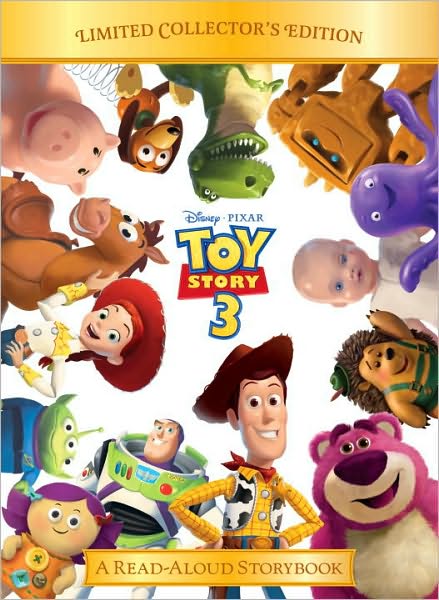
Toy Story 3: A Read-Aloud Storybook


Toy Story 3: A Limited Collector's Edition Read-Aloud Storybook. Adapted by Christine Peymani. 2010. Random House. 72 pages.

Sheriff Woody was in the middle of another exciting adventure.

Where does Woody fit into the picture now that Andy, his owner, is all grown up? What does Andy's going to college mean to his oh-so-loyal toys? Is the best case scenario a box up in the attic? For better or worse, that is not where Andy's toys end up. No, these toys are "destined" to leave the house once again on a wild-and-crazy adventure. An adventure that introduces them to plenty of new friends--and perhaps an enemy or two! What will become of them now? Will these toys get their happily ever after?

© Becky Laney of Young Readers
Wednesday, June 16, 2010

House of Dolls


House of Dolls. Francesca Lia Block. Illustrated by Barbara McClintock. 2010. June 2010. HarperCollins. 61 pages.

Wildflower, Rockstar, and Miss Selene lived in a house from another time, a white house with a red roof and red shutters and a red front door. In the garden was a real bonsai tree and a reflecting pool made from a pocket mirror tucked into a lawn of real moss. The floors were tiled with black-and-white parquet or softly carpeted, and the walls were covered with floral paper, foil mirrors, and paintings in gold doily frames. Above the dining room table was a silver chandelier fixed with birthday candles. Silk and lace curtains hung at every window.

Sometimes presentation matters. House of Dolls by Francesca Lia Block is a lovely example. It is beautiful inside-and-out. It is a small little book, but great attention has been paid to detail.

Wildflower, Rockstar, and Miss Selene are dolls now owned by Madison Blackberry, a very unhappy, quite lonely little girl. These dolls don't get played with very often--but the dolls don't mind. These are older dolls, and they enjoy keeping their own company. (And Madison's grandmother hasn't forgotten them completely--these dolls still get the occasional treat of a new dress.) Two of the dolls have boyfriends.
Wildflower was a celluloid doll with long black braids of real hair, pale skin, and big brown eyes with painted-on eyelashes. Guy was a dark-skinned plastic doll in army fatigues. It did not matter that they looked nothing alike.
The first time Madison Blackberry lay them down next to each other in the white lace canopy bed and their arms brushed, Wildflower and Guy knew they never wanted to be separated. Because Wildflower had lived so long and seen so much of the world, she would have been content just to sit beside Guy for the rest of her existence. (7)
Rockstar also has a boyfriend. But her boyfriend isn't a boy at all.
B. Friend was a devastatingly handsome stuffed bear with button eyes, an embroidered nose, and jointed arms and legs. He was a studious fellow with round wire-rimmed glasses with lenses made of clear dried nail polish. B. Friend wore a red crochet beret and a red flannel vest and britches. (9)
Miss Selene is a fairy doll. Since she doesn't have a soul mate, she spends her time trying on dress after dress. That is when she's not feeling sad about something she can't quite remember.

Why is Madison so unhappy? What will she do in frustration, in anger, in boredom? Well, you'll just have to read and see for yourself...

House of Dolls is about dolls. But it is about more than dolls. It is about a very real little girl struggling with some darker emotions. It is about a little girl very much in need of love and affection. It is an emotional story about a family learning just how much they need one another.


© Becky Laney of Young Readers
Monday, June 7, 2010

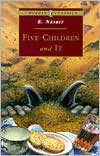
Five Children and It


Nesbit, Edith. 1902. Five Children and It. Puffin Classics. 237 pages.

The house was three miles from the station, but before the dusty hired fly had rattled along for five minutes the children began to put their heads out of the carriage window and to say, 'Aren't we nearly there?' And every time they passed a house, which was not very often, they all said, 'Oh, is this it?' But it never was, till they reached the very top of the hill, just past the chalk-quarry and before you come to the gravel-pit. And then there was a white house with a green garden and an orchard beyond, and mother said, 'Here we are!'

Robert, Anthea (Panther), Jane, Cyril, and Baby (Lamb) have come (along with their parents, of course) to spend some time in the country. But circumstances being what they are--parents in general being more a nuisance in a children's adventure story than anything else--the children are often all on their own except for some slight interference by Martha their nurse-maid. It is while they are exploring the gravel-pit that the children--much to their surprise--discover a sand fairy, a Psammead. (He is quite a character!) The children are granted a wish a day (thereabouts)...and thus the adventures begin.


I daresay you have often thought what you would do if you had three wishes given you, and have despised the old man and his wife in the black-pudding story, and felt certain that if you had the chance you could think of three really useful wishes without a moment's hesitation. These children had often talked this matter over, but, now the chance had come suddenly to them, they could not make up their minds. (17)
They may have their wish a day, but their wish ends at sunset. And as they discover, this is a VERY good thing!

This one is a funny adventure novel starring brothers and sisters who know how to get in and out of trouble and then some! I'm so happy I finally read this one. It was such a joy to read.


© Becky Laney of Young Readers
Monday, March 1, 2010

I Don't Want A Cool Cat!


I Don't Want A Cool Cat! By Emma Dodd. 2010. [August 2010] Little Brown Young Readers. 32 pages.

I don't want a cool cat.
A treat-me-like-a-fool cat.

I don't want a stuffy cat.
A huffy, over-fluffy cat.

I don't want a night cat.
A looking-for-a-fight cat.

I just love, love, loved last year's I Don't Want A Posh Dog. So I was so excited to see that there is a companion book called I Don't Want A Cool Cat. Because cat lovers need good books too, you know! This rhyming picture book (with a great feel for rhythm) shows what one little girl wants in cat. After listing the types of cats she doesn't want, she then describes the one she really wants.

It's cute. It's silly. It's fun. It really couldn't get any better than this.

© Becky Laney of Young Readers
Thursday, January 28, 2010

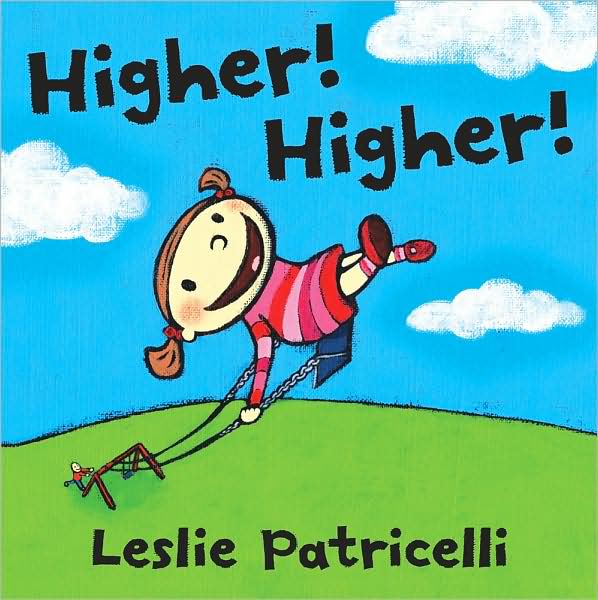
Higher, Higher


Higher! Higher! Leslie Patricelli. 2009. [March 2009] Candlewick Press. 32 pages.

Higher! Higher!

This one falls into the "I-can't-believe-I-haven't-reviewed-this-yet" category. It happens occasionally. I admit. I read a book. Love it. Read it to anyone and everyone I can. Brag about it to all my friends and family. And then somehow not get around to sitting down and typing up a review. Very sad when this happens. Even sadder--for me--because it means that I completely forgot to include it in my best-of-2009 posts. Because, you know, it so would have been topping the lists in the picture book category!

So, you might have guessed it already, but, I loved this one. I just didn't love it. I love, love, loved this one. Crazy about it. Think it's so clever, so right, so perfect. Loved the illustrations. Loved the simplicity of the text. The predictable genius of it all. A little girl. With her dad. Swinging on the swings. And loving every minute of it. (Loved the twist of this one too!)

This one almost begs to be read over and over again. And you know what, it holds up to multiple rereadings. You might even notice new things (in the illustrations, not the text) each time. Though this could just be me being slow to catch all the clever things hidden in plain sight.

I'm so happy to see this one will be a board book soon.

© Becky Laney of Young Readers

Saturday, January 9, 2010

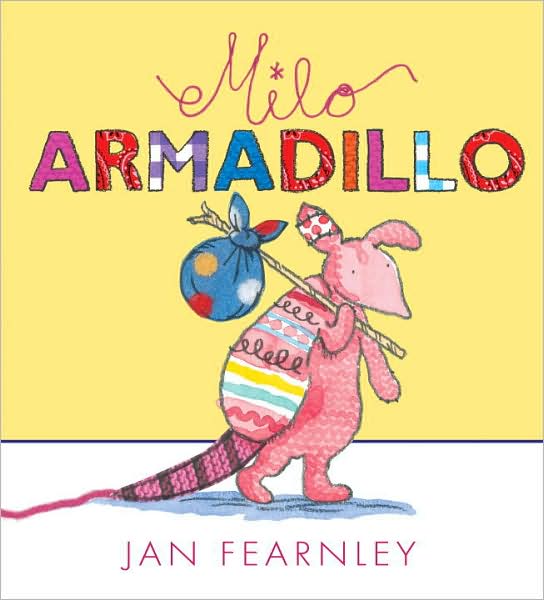
Milo Armadillo


Milo Armadillo. By Jan Fearnley. 2009. (December 2009). Candlewick Press. 40 pages.

When it was nearly Tallulah's birthday, her parents asked her what she would like for a present.
"I want a pink fluffy rabbit," said Tallulah.
You'd think it would be easy to find a pink fluffy rabbit.
But it wasn't.


This one has charm on its side. Granted, it wasn't love at first sight. (Much like Tallulah's experience, mind you). But by the end, this one had me hooked. It's a book-with-a-lesson, in a way, but it isn't a lesson that hits you in the head over and over again either. If I had to sum it up, it would be by quoting a Rolling Stones song--and how often does that happen in a picture book review I wonder?!--

You can't always get what you want
But if you try sometimes you might find
You get what you need


So, back to the book, what is this one about? Well, it's about Tallulah, the little girl, not getting a pink fluffy rabbit. Instead Tallulah gets a homemade gift (and knitted at that) from her Grandma. She asks for a rabbit, but well, mistakes were made along the way, and the result is a creature that looks more like an armadillo than a rabbit. Can a little girl learn to love-and-appreciate this oh-so-lovingly-handmade toy? Or will her heart always yearn for that old pink fluffy bunny?

This one reminds me of one of my favorite scenes in Arthur's Perfect Christmas. The one where D.W. *almost* melts down because she didn't get Tina-the-Talking-Tabby. Disappointments are part of growing up. And this little book about how-it-can-all-work-out feels right to me.

© Becky Laney of Young Readers
Wednesday, January 6, 2010

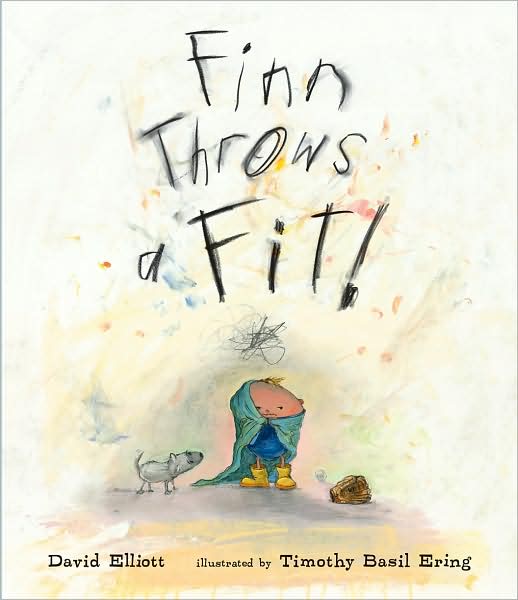
Finn Throws A Fit


Finn Throws A Fit! By David Elliott. Illustrated by Timothy Basil Ering. 2009. Candlewick Press.

Finn likes peaches.
Usually
.

Brilliant from cover to cover. This one is perfect, just perfect. A true been-there-felt-that kind of book just right for parents (and all adults really who've ever been around young children). What is this one about? Finn. Throwing. A. Fit. Not just a little fit. A managed fit. This is a full-blowout-need-back-up-fast kind of fit.

Today, Finn is cranky.
Anything could happen.
Uh-oh!
Thunder in the nursery!
Lightning in the kitchen!

All of the book works, the text just feels right. But my favorite-and-best line that just works oh-so-well (and makes me grin) is this one:

It lasts until it doesn't.

That is just so-very-very true. Anyway, I loved this book. Just loved it. And I think you'll enjoy it too!

© Becky Laney of Young Readers

Tuesday, January 5, 2010

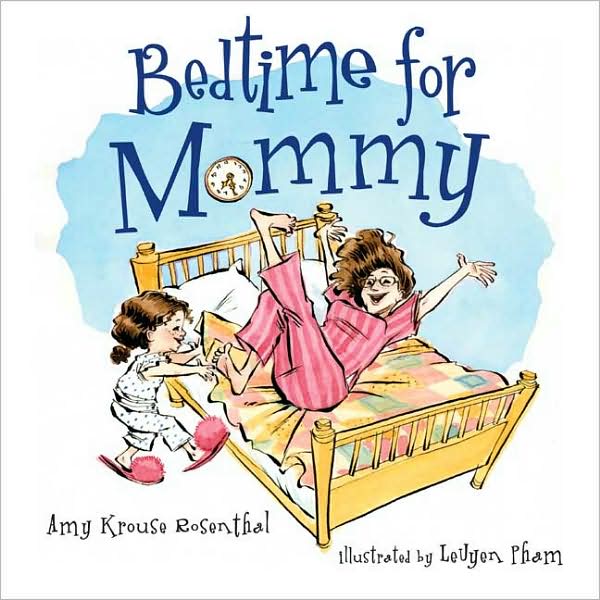
Bedtime for Mommy


Bedtime for Mommy. Amy Krouse Rosenthal. Illustrated by LeUyen Pham. 2010. (March 2010). Bloomsbury. 32 pages.

Time for bed, Mommy!

This bedtime book is practically perfect in every way. It's written by one of my very favorite authors, Amy Krouse Rosenthanal. It's also illustrated by one of my very favorite illustrators, LeUyen Pham. What is it about? Well, it's about a little girl who puts her mommy to bed. Everything from reminding her that it's getting time for bed, to making sure she's taken her bath and brushed her teeth. It's a sweet book; a cute book; an again-again book. It isn't the first picture book to reverse roles or to put a twist on the traditional bedtime story, but everything is so well done it goes straight to my favorite-and-best list.

I love, love, love the illustrations in this one. Pham takes a fun concept, a fun premise, and makes it work really, really well. I love how both the mom and the daughter are drawn. The way these two interact with each other, their scenes are just perfect, just right.

© Becky Laney of Young Readers

Tuesday, November 17, 2009

Yummy: Eight Favorite Fairy Tales


Cousins, Lucy. 2009. Yummy: Eight Favorite Fairy Tales. Candlewick Press. 121 pages.

Lucy Cousins (perhaps best known for her Maisy books) brings us eight (familiar) tales in this bright and bold collection for young readers. The tales included are: Little Red Riding Hood, The Three Billy Goats Gruff, The Enormous Turnip, Henny Penny, Goldilocks and the Three Bears, The Little Red Hen, The Three Little Pigs, and The Musicians of Bremen. (I only wish she'd chosen to include The Gingerbread Boy.)

Cousins' stories are a bit more violent than some contemporary retellings. She doesn't shy away from death and violence. (Though not each tale is violent. It's really just Little Red Riding Hood and The Three Little Pigs that are. Her wolves are definitely in the big and bad category.)

The text of each story is simple and straightforward.

Once upon a time, there was a girl named Little Red Riding Hood. Her mother asked her to take a basket of food through the woods to her grandmother, who was ill. Little Red Riding Hood had not gone far when she met a wolf.
What did I like best about this one? The illustrations! If you like Cousins' bright, bold, and colorful and larger-than-life (almost) illustrations. (Illustrations that command your attention right from the start.) Then you'll appreciate this collection of stories.

This is another impressive title by Candlewick Press.

© Becky Laney of Young Readers
Monday, November 9, 2009

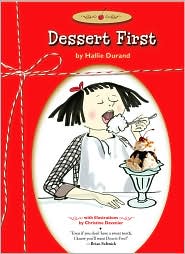
Dessert First


Durand, Hallie. 2009. Dessert First. Simon & Schuster. 151 pages.

I don't know if Mrs. Howdy Doody is her real God-given name or not, but on the very first day of third grade, our teacher told us to call her that She also told us, on that very first day, to march to our own drummers.

This book was satisfying. Dessert Schneider, the narrator, just charmed me through and through. It's one of those books that I wished I could have read as a kid. Because I know that while I liked it now as an adult, I would have been crazy about it as a kid. I'm not sure exactly why. Sure it is a great book that is passionate about food--about desserts to be exact--but I think it goes beyond that. I think it is Dessert herself. I can see myself in her. She's so perfectly imperfect. So lovably flawed. She doesn't always do the right thing, say the right thing. She makes mistakes. And, on a good day, she recognizes that and tries to fix it. I like that she's unique. That she has her own way of seeing the world.

I don't know that I can pinpoint exactly what this one is about. It sounds silly to say it's about an 8 year old learning some important life lessons. Because while Dessert does learn from some of her mistakes, the book isn't about her learning from mistakes. (In an oh-so-didactic way). It's about Dessert, about her family, about her teacher, about a school project, about life itself.

The project is asking the students to give up something that they love for two weeks. Each day they succeed, their sponsor(s) give a designated amount of money. ($2 a day for not doing whatever it is, for example.) Dessert struggles with what to give up. Because while she thinks the prize is good (they're raising money for something for the playground I believe), she doesn't want to give up something too big (like desserts), but she can't be too obvious about giving up something too small. (Like mayonnaise.) What's a girl to do?

© Becky Laney of Young Readers
Saturday, October 10, 2009

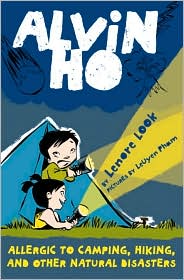
Alvin Ho: Allergic to Camping, Hiking, and Other Natural Disasters


Look, Lenore. 2009. Alvin Ho: Allergic to Camping, Hiking, and Other Natural Disasters. With illustrations by LeUyen Pham. Random House. 170 pages.

You will know some things about me if you have read a book called Alvin Ho: Allergic to Girls, School, and Other Scary Things. But you won't know all about me, so that is why there is now this second book.

As I mentioned in my review of Alvin Ho, Allergic to Girls, Schools and Other Scary Things, I just love, love, love Alvin Ho. (So much so that I'm urging my mom to read them!) Did I love this second book as much as the first book? Yes! I loved it just as much if not more. I don't know that I could *really* choose between the two books. I just love Alvin so much--can relate to Alvin so much--can feel what he feels, see the world as he sees it, that the books just feel oh-so-right to me. What's this one about? Well, it's about a father-and-son camping trip. A trip that gets interrupted by little Anibelly. A trip that doesn't go exactly as planned. But a funny, unforgettable trip all the same!

As you might have guessed, Alvin doesn't exactly want to go camping. Not even with his dad who is his best friend on account of him saving Alvin's life "seven hundred and fourteen times eight" and "mostly in the nick of time." One particular moment stands out to me in this one--that just me all warm and cozy inside--this is when Alvin makes his will the night before going camping. (He's not sure he'll return.)

My Last Will and Testament

I, Alvin, being of scaredy mind and scaredier body, hereby leave to my brother, Calvin, the following:

my old toothbrush (I'm taking my new one with me)
my silver dollar
my Houdini kit
all my socks under my bed.

And to my sister, Anibelly, I leave:
my carved sticks collection
one piece of sea glass
my Firecracker Man outfit, maybe

To My dog, Lucy, I leave my tennis balls

To my dad I leave my baseball glove, maybe.

And to my mom, I leave all my love. (89, 91)
The book is charming and funny and cute and sweet. It's never too cute or too sweet. I don't want to give the impression that it is oh-so-darling or anything. It's a funny book, a book that I think boys and girls would enjoy reading. (I think it would make a GREAT read aloud.)

© Becky Laney of Young Readers
Alvin Ho: Allergic to Girls, School, and Other Scary Things


Look, Lenore. 2008. Alvin Ho: Allergic to Girls, School, and Other Scary Things. With illustrations by LeUyen Pham. Random House. 172 pages.

The first thing you should know about me is that my name is Alvin Ho.
I am afraid of many things.
Elevators.
Tunnels.
Bridges.
Airplanes.
Thunder.
Substitute teachers.
Kimchi.
Wasabi.
The dark.
Heights.
Scary movies.
Scary dreams.
Shots.
School.
If there were no school, my troubles would blast away, just like that. I would dig holes all day. I would play catch with my gunggung. I would watch cooking shows. I would keep an eye on things. It would be fantastic.
The second thing you should know about me is that even though I am afraid of many things, I am not afraid of anything that explodes. I love explosions.


If that doesn't make you want to read Alvin Ho, I don't know what will. How much did I love Alvin? I didn't just love him. I love, love, loved him! I think we're kindred spirits and everything. But there's one little problem. Alvin doesn't like girls. At all. And he wouldn't want a girl like me for a friend. Even if we do have oh-so-much in common. I loved everything about Alvin as I said. He is the middle child. He has an older brother, Calvin, and a little sister, Anibelly. (I also love them.) He has two great parents as well. I especially loved the Dad and his Shakespearean insults. (A trait that Alvin definitely picks up!)

What makes this book so wonderful besides the characters themselves? The narration, the style! I think Look has captured how children think and talk and act. It felt right to me. Just right. There is much to smile over in this one. It's a satisfying read with plenty of humor and heart.

I also love the illustrations by LeUyen Pham. I must admit I'm a big fan of her work. So they were just right for this one. And they added just that much more to the book. (Much like the original illustrations for Ramona made me love her all that much more!)

So I would definitely recommend this one! Alvin Ho is getting ready for second grade, so I'd imagine this would be a perfect read aloud for first graders and second graders.

© Becky Laney of Young Readers