Showing posts with label art appreciation. Show all posts

Thursday, September 25, 2025

100. The Crayon Stub


100. The Crayon Stub. Marcus Cutler. 2025. 40 pages. [Source: Library] [3 stars, cats, art, creativity, picture book]

First sentence: Alright, I have my fresh new piece of paper and my box of big, beautiful crayons. Time to draw something TOTALLY SPECTACULAR and become WORLD FAMOUS! No big deal.

Premise/plot: Big Cat's big plans don't go as planned--not at all. It starts with Big Cat discovering that he only has one crayon in his crayon box, and that one crayon is a stub--a red stub. Can Big Cat draw a spectacular picture with just a tiny stub of a crayon?! Can Big Cat draw ANY picture with just a stub? Will he get the opportunity? Or will his sibling interfere?!

My thoughts: I liked this one. I did. It was cute enough, silly enough. I didn't love it as much as I'd hoped all things considered. Probably because I'm an overthinker. I didn't really like the humorous direction this one took of the sibling EATING both the paper and the crayon and magically--literally--spitting out a drawing. I thought that was a little too over the top for me. But I think others may enjoy this one.


© 2025 Becky Laney of Young Readers

Monday, June 16, 2025

62. Here Is a Book


62. Here is A Book. Elisha Cooper. 2025. 40 pages. [Source: Library] [4 stars, picture book, book about books]

First sentence: Here is an artist, looking.
And look, here is the artist's garden
made with sun, rain, dirt,
shovels, seeds,
and love.
And here is the artist's home built with wood, hammers,
paint, brushes, a shingled roof, and care,
and her kitchen filled with an oven, bread,
raspberry jam, family, a cat,
and warmth.

Premise/plot: This book celebrates the creation of books poetically--and somewhat abstractly--walking readers through the creative process of writing and publishing a book. The details are more towards an artist illustrating a book or perhaps writing and illustrating a book. 

My thoughts: I enjoy reading books about books. This narrative reads almost like a poem. It is an artistic-creative 'ode' to creating a book. Because of the narrative style I'm thinking elementary aged readers instead of preschoolers or pre-K. 

© 2025 Becky Laney of Young Readers

Friday, January 27, 2023

20. Meowsterpieces


Meowsterpieces: A Cat's Guide to Art...and Life! Jenn Bailey. Illustrated by Nyangsongi. 2022. [September] 32 pages. [Source: Review copy]

First sentence: Come walk along with Mama Cat
and tour the works of art.
Inside each frame you're sure to find
your own creative heart.
Mama Cat is far from pleased:
Her Kits ignore their dishes.
Their supper's filled with Tangled Strings
and Mousey-Hunting Wishes.
And so she feels the time is right
to boost their kitten smarts.
"Gather roun, you cheeky Kits--
come learn the Feline Arts."

Premise/plot: A mama cat is "teaching" her kittens about how to kitten...or how to cat, if you will. This lesson comes in verses that rhyme. 

My thoughts: I love, love, love, love, love, love the illustrations. Thirteen artworks [one of the thirteen is a photograph] inspire the illustrations for this picture book.

The Study of a Student by Laura Wheeler Waring
The Last Supper by Leonardo da Vinci
The Birth of Venus by Sandro Botticelli
The Night Watch by Rembrandt van Rijin
Nighthawks by Edward Hopper
A Sunday on La Grande Jatte by Georges Seurat
The Dancing Class by Edgar Degas
Jockey on a Galloping Horse by Eadweard Muybridge
Bedroom in Arles by Vincent Van Gogh
Children's Games by Pieter Bruegel the Elder
Under the Wave off Kanagawa by Katsushika Hokusai
The Banjo Lesson by Henry Ossawa Tanner
New York Construction Workers Lunching on a Crossbeam by Charles Clyde Ebbets

The cats steal the show in this one.

As for the text, well, I am almost so distracted by how awesome the illustrations are that I neglect the text. I think the text is fine.


© 2023 Becky Laney of Young Readers

Tuesday, February 15, 2022

30. The People's Painter


The People's Painter: How Ben Shahn Fought for Justice with Art. Cynthia Levinson. Illustrated by Evan Turk. 2021. [April] 48 pages. [Source: Library]

First sentence: From the time he could grasp a pencil, Ben Shahn yearned to draw everything he saw in his village in Lithuania.

Premise/plot: The People's Painter is a picture book biography of Ben Shahn. 

My thoughts: I love learning. I do. And picture books are a great format for learning new-to-me stories. I had never heard of Ben Shahn, a Jewish artist and activist before reading this award-winning picture book. I am SO glad I read it. I thought it was packed with information--in an age appropriate way. The art and text work together so well. (As you'd expect in a picture book about an artist.)


© 2022 Becky Laney of Young Readers

Monday, September 27, 2021

152. Monet's Cat


Monet's Cat. Lily Murray. Illustrated by Becky Cameron. 2020. [May] 32 pages. [Source: Library]

First sentence: Monet was a famous painter with a magic cat. Her name was Chika. She was made of delicate pottery, and lay on a cushion, cool and still, until...Monet tapped her three times with his paintbrush. Then Chika came alive!

Premise/plot: Chika and Monet have lovely adventures together by visiting the paintings in the museum--literally. The two can hop in and out of the artwork! Of course, Chika may be having a bit more fun than Monet--who is chasing her! How much trouble can one cat be?

My thoughts: I enjoyed this one. I liked it. I do like French impressionists. It's playful and art appreciation all at the same time.


© 2021 Becky Laney of Young Readers

Monday, July 26, 2021

88. Before They Were Artists: Famous Illustrators As Kids


Before They Were Artists: Famous Illustrators As Kids. Elizabeth Haidle. 2021. [April] 64 pages. [Source: Library]

First sentence: What sparks an artist's beginning? Did young artists realize they were destined for art? Were they summer art campers, comics clubgoers, or members at all the museums? Did their pets sit still for portraits, waiting to be sketched? Did their parents hang Picassos and read art history books aloud? A lucky few were born into artistic households. Art making was expected, a family tradition. Yet many didn't realize they could publish their creations until after they grew up. Still, the experiences they gathered in childhood made them expert storytellers later.

Premise/plot: Before They Were Artists is a celebration of six illustrators. It is a nonfiction graphic novel. Each artist--Wanda Gag, Maurice Sendak, Tove Jansson, Jerry Pinkney, Yuyi Morales, and Hayo Miyazaki--has a biographical sketch and as the title implies focuses on how they came to become artists. 

My thoughts: I definitely enjoyed this one! I loved that they started with Wanda Gag! I love, love, love, love Millions of Cats. It was fascinating to read more about her and to see her creative process. The other stories were also interesting and informative. It is only natural that each reader will have a favorite of his or her own. But really all the stories offer value and insight. 

As I mentioned before the book is packed with information and details. Readers may know some details--but there is plenty to learn.

One of my favorite I didn't-know-that-facts I discovered was that Wanda's brother was paid to hand-letter the story Millions of Cats because Wanda did not like mechanical looking print!

I would like to see this turned into a series. So many illustrators. So many authors. I'd love to see more behind-the-scenes work showing the process of book making.

ETA: There is already a book for authors....and I reviewed it in 2019. In my defense, 2019 feels like YEARS ago. BEFORE THEY WERE AUTHORS.

© 2021 Becky Laney of Young Readers

Thursday, January 14, 2021

5. The Great Cookie War

The Great Cookie War. Caroline Stellings. 2021. [April] 160 pages. [Source: Review copy]


First sentence: At night when darkness fell, and the winter winds swept across the open meadow, the wild things would come to the edge of the clearing. Mama left scraps for them; she said they were searching, always searching. At such an hour, our fieldstone house felt safe, and warm—a refuge, an island of light and love in a cold sea of darkness. And yet, at such an hour, so many things crept into my mind, uninvited thoughts, thoughts I didn’t want to have.

Premise/plot: The Great Cookie War is set in a Canadian Mennonite community in the early 1980s. Beth Betzner, our twelve year old heroine, LONGS to be an artist. But her creative hobby isn't always--often is not--appreciated by her immediate family. There are many skills that help with one's duty within the community--but drawing, sketching, painting aren't seen as super valuable. Even if her family supported her art habit, the family couldn't pay for her art supplies and lessons. But an opportunity presents itself to Beth--and the rest of the family--when a New York lawyer comes to town one winter. 

A cookie war is coming. Yes, a COOKIE war. Two big-name companies are getting ready to battle it out in the court system. Does one company's patent on both a crispy/chewy cookie prevent the other company from making its cookie?. The big city lawyer says NO. Chewy/crispy cookies have existed for centuries and can't be patented. The proof may be in this OLD family recipe book in the possession of the Betzner family. 

The problem? The family does NOT want to loan out the book to either side. The family does NOT want to appear in court for either side. Money is not the issue. Far from it. But Beth is tempted....especially when out and out offered the chance to fulfill her dream. 

Who will win the great cookie war?

My thoughts: I really LOVED this one. There are plenty of Mennonite (and/or Amish) books published for adults--usually romances. There are hardly any children's books starring Mennonites (and/or Amish) characters. This one is a COMING OF AGE book with some ADVENTURE thrown in. Will Beth, our heroine, be courageous when put to the test? 

I also LOVED that it is based on a true story. 

In a Globe and Mail article from 1985, June Callwood called it “The Great Cookie War.” For cookbook author Edna Staebler and her Old Order Mennonite friends in Waterloo, the whole thing was foolishness! The recipe for rigglevake cookies had, after all, been scribbled in Bevvy Martin’s little black book for decades. Why all the fuss now? When it was published in Edna’s bestselling and world-famous Food That Really Schmecks, no one could have known the brouhaha that one little recipe could create. But it did.

The situation began eleven years after Schmecks had been published. Procter and Gamble (P&G) had put eighteen million dollars into bringing a new cookie to market, one that would be crispy on the outside, but chewy in the middle. They patented their secret recipe in 1979. When rival Nabisco began baking similar cookies, P&G sued for infringement of copyright. And both sides were desperate to get their hands on that little black recipe book. Why? Because it was from that book that Edna Staebler copied the recipe for rigglevake cookies, and rigglevake cookies are crispy and chewy at the same time. And since the recipe was published in Schmecks, Nabisco argued that P&G had no case.
Through it all, Edna Staebler fiercely protected her Mennonite friends and eschewed offers from radio and television stations—she even declined the chance to appear on the Jay Leno show. Caroline Stellings kept up a personal correspondence with the cookbook author, and was so impressed by her charismatic personality, that she always knew that one day, she would write a book about Edna Staebler and her involvement in “The Great Cookie War.”

© 2021 Becky Laney of Young Readers

Tuesday, March 27, 2018

Bonjour, Mr. Satie

Bonjour, Mr. Satie. Tomie dePaola. 1991. 32 pages. [Source: Bought]

First sentence: Ever since the postcard arrived from Paris, Rosalie and Conrad had been waiting for the arrival of their uncle--Mr. Satie, world traveler--and his companion, Ffortusque Ffollet, Esq. Every day they asked Mama and Papa when they would arrive.

Premise/plot: Rosalie and Conrad are happy to welcome Mr. Satie--and guest--into their home. Mr. Satie arrives and has a wonderful story to tell about recent goings-on in Paris. Mr. Satie was at a gathering of friends--of artists--and he was able to help make peace between two factions. One group LOVED Henri's new style of painting and thought it was the BEST. The other group loved Pablo's new style of painting and thought it was the BEST. It wasn't only that one "needed" to be better than the other. No, each group HATED the other style and thought it the WORST--that it wasn't even worthy of being called art. Can Mr. Satie help maintain the peace--not just for one night--but for good?!

My thoughts: I found the book to be odd. Not necessarily odd in a bad way. Mr. Satie and his family are cats. His friend, his guest, is a mouse. That's not the weird part. I almost expected the whole cast of the picture book to be one or the other or even both. Animals in place of people. But, no, Pablo, Henri, and all the artistic crowds in Paris are people. So it isn't strictly animal fantasy OR historical/realistic. The story itself was okay. I found it interesting. If you're looking for an 'art-appreciation' book to share with little ones, this one is worth considering.

Text: 3 out of 5
Illustrations: 3 out of 5
Total: 6 out of 10

© 2018 Becky Laney of Young Readers

Monday, November 22, 2010

Nonfiction Monday: A Book About Color


A Book About Color. Mark Gonyea. 2010. Henry Holt. 96 pages.

Chapter One: Welcome to the Neighborhood
This is Color Street.
On Color Street, the houses are red, orange, yellow, green, blue, and purple.
Red, yellow, and blue are called primary colors. 
Let's make those houses bigger.
You can use the three primary colors to make more colors.
Red and yellow make orange.
Yellow and blue make green.
Blue and red make purple. 
Orange, green, and purple are secondary colors because they're made with primary colors.


I have really enjoyed Mark Gonyea's previous books about design: A Book About Design: Complicated Doesn't Make It Good and Another Book About Design: Complicated Doesn't Make It Bad. These books are very reader-friendly, yet informative. Anyone interested in art--in design--no matter your medium or format--can benefit from reading these books.

The first chapter introduces readers to primary and secondary colors.

The second chapter discusses how different colors can represent different things. ("Red is loving. Red is dangerous.")

The third chapter discusses the concept of warm and cool colors.

The fourth chapter discusses the colors in relationship with one another. (Complementary colors, and analogous colors).

The fifth chapter discusses shades and values of color. In other words saturation and desaturation. ("Saturation is the amount of color in...well...color.") This is also where he discusses the "colors" black and white and shows how they can change the value in other colors--making things lighter or darker.

The sixth chapter presents the concept of the color wheel.

I liked this one. I would definitely recommend it along with his previous books to anyone interested in art and design.

© Becky Laney of Young Readers

Thursday, September 23, 2010

Art & Max


Art & Max. David Wiesner. 2010. October 2010. Clarion (Houghton Mifflin Harcourt). 40 pages.

Careful, Max!
Hey, Art, that's great!
The name is Arthur.
I can paint too, Arthur!
You, Max? Don't be ridiculous.
Oh, all right. Just don't get in the way.
Art and Max are friends. Arthur is a great artist. Max, well, not so much. He's new at it. He's got much to learn. Can a painting lesson turn into a great adventure? You might just be surprised!

I really liked this one. I liked both Max and Arthur. (I especially liked Max's enthusiasm.) I liked Wiesner's storytelling too. It's a funny story. The illustrations tell much of it.

I really enjoyed the Library of Congress Cataloging one-sentence summary:
Max wants to be an artist like his friend Arthur, but his first attempt at using a paintbrush sends them on a whirlwind trip through various media, with unexpected consequences.
It does such a great job!

© Becky Laney of Young Readers

Wednesday, June 9, 2010

My Best Friend is As Sharp As A Pencil


My Best Friend is as Sharp as a Pencil. Hanoch Piven. 2010. May 2010. Random House. 40 pages.

When Grandma comes to visit, she asks so many questions about school. What is your teacher like? What's your favorite part of the day? Who is your best friend? Who is your favorite teacher? Who do you play with? Who is your second-best friend? Who's in your class? This time, instead of giving her the same old boring answers, I have an idea...I'll show her!


I enjoyed My Best Friend is as Sharp as a Pencil. I liked the expressiveness of it. How the text and art work together to create descriptions. For example, the young boy on the cover--the best friend, Jack--is described this way:

Jack knows everything about every country in the world.
Jack is as sharp as a pencil,
as curious as a magnifying glass,
and as precise as a microscope.
The art shows a boy with globes for eyes, magnifying glasses for glasses, a pencil for a smile, and a microscope as a nose. This book--in many ways--all about the art, the illustrations. The way you can use objects--everyday objects--in art. I also liked the language--the text is just as rich as the art in some ways. I like the way the librarian is described:

Listening to Mrs. Sheila, the librarian, is as exciting as rubbing a magic lamp.
She is as interesting as a book full of stories.
When she reads them, her eyes shine like marbles.
She can be as funny as a clown or as scary as a monster.
© Becky Laney of Young Readers

Tuesday, April 27, 2010

Lily Brown's Paintings


Lily Brown's Paintings. By Angela Johnson. Illustrated by E.B. Lewis. 2007. Scholastic. 32 pages.

Lily Brown loves her mama, daddy, and baby brother and the world they live in.
Sometimes she spins around her room thinking about their world. And it's wondrous.
But when Lily Brown paints, her world starts to change.

The sunlight turns to stars,
and Lily begins flying
around them. All the universe
is one big colorful splash.

The stars circle the planets
in Lily Brown's paintings...
Lily Brown's Paintings is a book about wonder and joy. A celebration of life and art. Of beauty and imagination. I really enjoyed this one. I thought it was beautifully written. And I thought the illustrations by Lewis complemented the text well.

© Becky Laney of Young Readers
Saturday, July 4, 2009

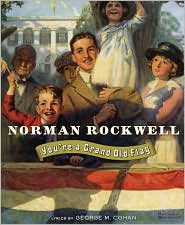
You're A Grand Old Flag


Cohan, George M. 2008. You're A Grand Old Flag. Featuring the art of Norman Rockwell. Simon & Schuster.

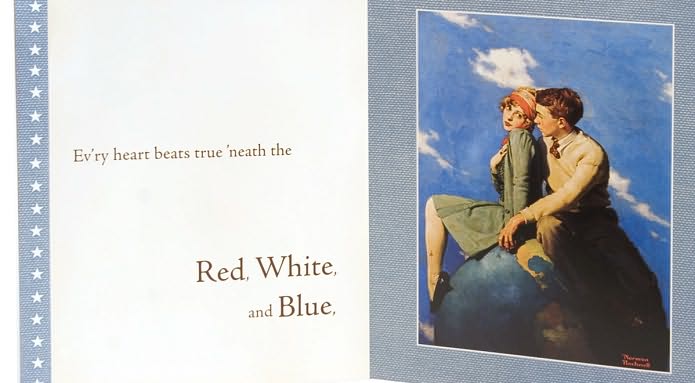
Norman Rockwell art is paired with the patriotic song "You're A Grand Old Flag" in this beautiful, celebratory picture book. Fourteen illustrations capturing the 'spirit' of America have been chosen to appear alongside George M. Cohan's lyrics. These illustrations span seven decades: the earliest being 1918, the latest being 1971.

It's a book that is enjoyable on several different levels. I love looking at the art. Studying all the details. Imagining the stories-behind-the-art. Rockwell art has a way of making me curious. Of making me want to know more.


© Becky Laney of Young Readers
Friday, March 13, 2009

Magritte's Imagination


Rubin, Susan Goldman. 2009. Magritte's Imagination. Chronicle Books.

For those parents dying to introduce surrealism to their babies--and really who doesn't fall into that category?--your wait is at long last over. Introducing Magritte's Imagination. The book uses eleven pieces of art by Rene Magritte combined with simple text by Susan Goldman Rubin. On the one hand, the text is simple and cohesive. It weaves all the pieces together into a story--a bit of a fantastical story grounded in the imagination over reality--but a story nonetheless. Here is how it begins: "All aboard! Choo! Choo! Where do you think we'll go?"

I'm not sure how practical the book is. Other books in the series include Andy Warhol's Colors, Counting with Wayne Thiebaud, and Matisse Dance for Joy. And though I haven't seen those, they sound a bit more practical. Concept books about colors and numbers? Sounds like it's reasonable for a board book. Dance? Well, babies and toddlers do like to dance. As soon as they can stand on their own, dance just happens. The moving and shaking is just too cute. So a board book about dance, sounds like it could work well. I'm just not all that sure about babies needing to know about the art of Magritte...to learn to imagine a world where "eyes and noses grows on trees and apples grow on faces..." I'm not trying to stifle imaginations and curb future artists-in-the-making. I just think a picture book might be a better format than a board book for reaching the best audience, the more appropriate audience.

I'm certainly not a baby. So I suppose that I could be wrong here. This book could have magical sway over babies everywhere. I'd have to see it in action--in the hands and mouths of babies--to know how wrong (or right) I was.

© Becky Laney of Young Readers

Jacob Lawrence In the City


Rubin, Susan Goldman. 2009. Jacob Lawrence In the City. Chronicle Books. (April 2009 release)

Using eleven artworks of Jacob Lawrence as illustrations, Susan Goldman Rubin has written a board book that describes the sights and sounds of city life. Some of the pages are great, "Busy City! Beep, Beep, Beep!/ Builders Buildin' Rat-a-Tat," Other pages seem to have an older reader in mind. "And you and I In School/ Count my numbers 2, 3, 4./ I'll show Mom when I get home. Won't she be so proud of me?" The story is surprisingly cohesive considering that she's basing the text on classic pieces of art covering several decades. (The earliest being 1936 and the latest being 1974.) I can see a book like this being good for introducing art/art appreciation to children. The bright, bold colors. The scenes of ordinary life. The vibrancy of it all. But is a board book really the best format for such a book? As a picture book, I can see it working within an elementary school setting. But as a board book for babies and toddlers? I'm having trouble seeing it. I'm a firm believer that board books are for babies. That they should be books for babies about babies. The best subject matter for board books are baby-type things. Once a child has learned to not put things in their mouth, once they know that books aren't for chewing, once they know that books aren't for tearing and ripping...then it's time for picture books. For some that might be two or three. Maybe. But I have a hard time seeing a baby or a toddler really grasping the text of the book. It holding their attention. It grabbing their interest. Most of the book features older children--elementary-aged children--doing things that big kids do. Even if some things go over their heads, at times a book can still be enjoyed because of the rhythm of it, the sound of it. I'm not sure this one can be considered such consistently. As I said, I think some pages are better than others. Can they appreciate the illustrations? Maybe. The bold and bright colors. I like the idea of introducing even the youngest to great works of art. I'm just not sure it works as a board book. If this was a picture book, I would be thinking it was good.

© Becky Laney of Young Readers

Wednesday, March 4, 2009

1, 2, 3 I can collage!


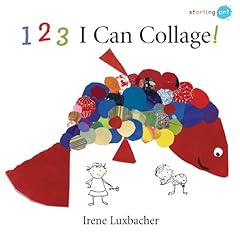
Luxbacher, Irene. 2009. 1 2 3 I Can Collage! (Starting Art series). Kids Can Press.

This book is part of a series, the Starting Art series. Earlier titles include 1 2 3 I Can Draw, 1 2 3 I Can Paint, 1 2 3 I Can Sculpt. Granted I've only read this title--1 2 3 I Can Collage--but if the other titles are anything like this one, I must say that they'd all be must-haves for the classroom, the library, and the home.

(I think they'd be great to have if you homeschool your children. They might make you feel more comfortable, more confident, in introducing art to your children's day without feeling overwhelmed because you yourself are not an expert.)

We have within the book step-by-step projects. Everything sounds so simple, so straightforward, so direct...and so fun.

I love the note she includes for parents and teachers:

3 Tips to ensure a good collage experience every time
1. Use inexpensive materials and make sure your young artist's clothes and the work area are protected from spills. This way it's all about the fun, not the waste and the mess.
2. Focus on the process rather than the end product. Make sure your young artist is relaxed and having fun with the information instead of expecting perfection every time.
3. Remind your young artist that mistakes are an artist's best friend. The most interesting collage ideas and paper combinations are often discovered by mistake.

© Becky Laney of Young Readers
Saturday, December 13, 2008

Deck the Halls


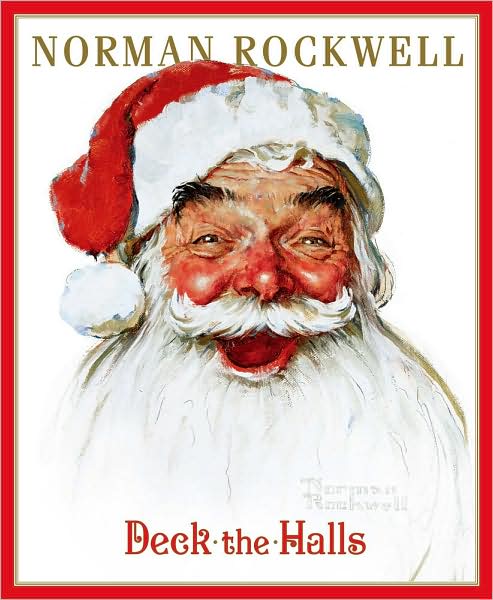
Deck the Halls is a new picture book featuring the lyrics to this classic holiday song paired with the artwork of Norman Rockwell--one of the most recognizable American painters of all time. The book includes illustration credits that--among other details--shows when each one was painted. The earliest, 1917, the latest, 1964. The book can be enjoyed on several layers: it's a great song--familiar to children and adults alike; and it's great artwork. Perhaps this could be an intro to 'art appreciation' during the holiday season.


© Becky Laney of Young Readers
Thursday, September 25, 2008

The Lord Is My Shepherd


The Lord is My Shepherd: The Twenty-Third Psalm. Illustrated by Gennady Spirin.

The text should be familiar to most Christians. Perhaps even outside the Christian realm is this one known. The 23rd Psalm has such a poetical flow about it that is very evocative. This is probably *horrible* to admit, but when I read these words, it brings to mind the scene in Gone With The Wind (where Scarlett is nursing the soldiers in the army hospital) right before the seige of Atlanta begins. I believe the shot is of a stained glass window. You can hear the sounds of cannons in the background. Anyway, my confession time is over!

The text is the King James Version of the Bible.

So let's say you know the text, what would make you want this book in your collection? The artwork perhaps. Each two page spread has an incredibly detailed and most often exquisite artistic rendering. These spreads will appeal to some more than others. (There is something very old-fashioned and traditional about the art. Not that it isn't beautiful. But I fail to find it breath-takingly beautiful. The art didn't wow me.) Or perhaps this might make an ideal way to aid memorization of the 23rd Psalm. (That I could understand completely. I attended a Christian school that was big on memorization.)

Rereading my review, it might seem I'm a harsh critic. That isn't at all the case. It's not that I disliked this one at all. I think the Scripture speaks for itself. And in many ways the art does as well. You'll either be drawn to it, or you won't. Nothing that I say--one way or the other--will persuade you.

The LORD Is My Shepherd
A Psalm of David.

1 The LORD is my shepherd; I shall not want.
2 He maketh me to lie down in green pastures:

he leadeth me beside the still waters. Rev. 7.17
3 He restoreth my soul:

he leadeth me in the paths of righteousness for his name's sake.
4 Yea, though I walk through the valley of the shadow of death,

I will fear no evil: for thou art with me;
thy rod and thy staff they comfort me.
5 Thou preparest a table before me in the presence of mine enemies:

thou anointest my head with oil;
my cup runneth over.
6 Surely goodness and mercy shall follow me all the days of my life:

and I will dwell in the house of the LORD for ever.


© Becky Laney of Young Readers