Showing posts with label J Historical Fiction. Show all posts

Sunday, March 26, 2023

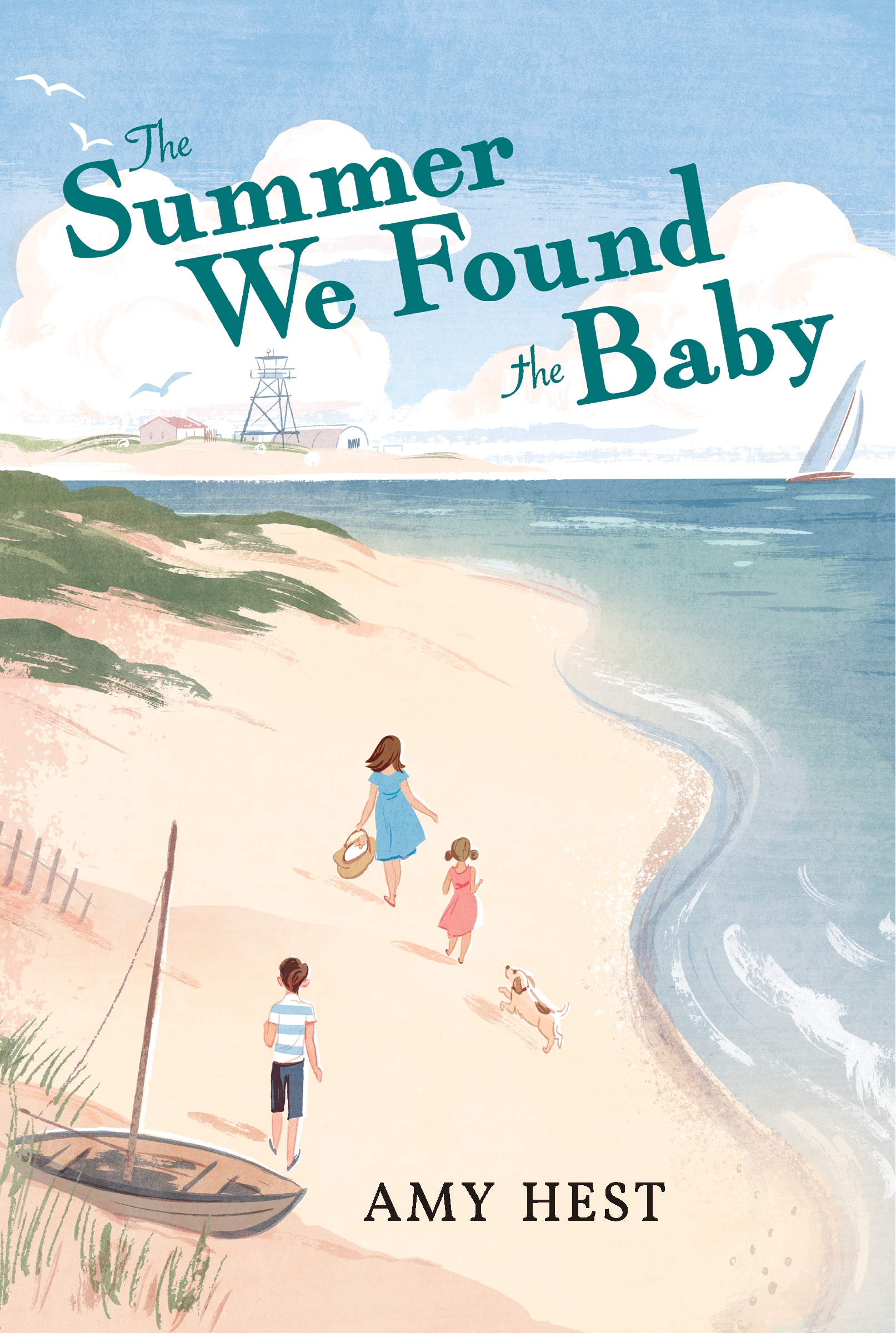
73. The Summer We Found the Baby


The Summer We Found The Baby. Amy Hest. 2020. 192 pages. [Source: Library]

First sentence: I'm the one who found her. A real, live baby girl and I saw her first. I saw the basket. Right over there, on the steps of the new children's library. A tiny little baby! All by herself in that basket! She was so brave, though. She wasn't even crying. I just wanted to hold her awhile. I didn't mean to take the baby.

Premise/plot: This children's book is set during the Second World War. It opens on a summer day--August 31. Three children (Julie and Martha Sweet, and their neighbor, Bruno Ben-Eli) find a baby in a basket on the steps of the [new] children's library. Each chapter features narration by all three--Julie, Martha, Bruno. Each chapter reveals details fleshing out their story. Everything leads to the big day--August 31. As you might have guessed, this one is not a linear or chronological story. Readers learn about the characters, the story, the setting--slowly but surely. 

My thoughts: I really loved this one! I did. There were a few [subtle] moments of sadness. But nothing overwhelming or heavy. Observant readers can read behind the lines as to how the characters might be feeling. It has a great premise--children finding an 'abandoned' baby on the steps to the public library. It has dimensional characters--I really loved getting to know all three protagonists. I loved the complex relationships. Readers learn relatively early on that Bruno and Julie have fallen out; they were friends once, but no more. I love how human all these characters are. I felt empathy for all three.


© 2023 Becky Laney of Young Readers

Friday, March 3, 2023

57. Rosetown Summer


Rosetown Summer. Cynthia Rylant. 2021. [July] 96 pages. [Source: Library]

First sentence: Rosetown Paper and Press sat on Main Street in Rosetown, Indiana, and it was one of Flora Smallwood’s favorite places to be. The shop belonged to Flora’s mother and father, and all of its beautiful cards and calendars and journals had been printed on an old-fashioned letterpress in the back room.

 ETA: I first read Rosetown Summer in August 2021. I enjoy this sequel. Definitely. Both books are great. But this one is shorter and even less happens. The writing is still great. But set your expectations a bit lower. Definitely character driven.

Premise/plot: Yesterday I reviewed Rosetown by Cynthia Rylant. Rosetown Summer is the sequel. It is set in the summer of 1973 in Rosetown, Indiana. Fourth grade is complete, and Flora and Yury have the whole summer ahead. But change is coming...the owner of Wings and a Chair Used Books may be moving away!

My thoughts: I loved, loved, loved the first book. I love, love, love this second book. Flora and I are just kindred spirits I tell you. Except FLORA is better with glue. Definitely better at glue! This was just a treat of a book.

Quotes:

Yury says I should write stories,” Flora said. “But I’d rather read them.”
Her father nodded. “I’d rather look at photographs than take them,” he said.
“Really?” asked Flora.
“But I guess if all photographers felt that way,” answered her father, “we wouldn’t have any photographs to look at.”


The bookshop had, in many ways, become their story, Flora and Yury’s. Every story needs a setting and a beginning, and Wings and a Chair had given them both.

“Is Miss Meriwether going to move away?” she asked her mother. Flora wasn’t sure she really wanted to know the answer. When a question is so big inside one’s mind, sometimes a person does not really want to know its answer.
Her mother sighed. She looked away a moment, then looked back at Flora.
“She seems torn,” Flora’s mother said. “Miss Meriwether is at one of life’s crossroads: to stay or to go. This is a problem many people face.”
Flora shook her head. “Not me,” she said. “I would always choose to stay.”
Her mother smiled. “But if you aren’t at a crossroads yet, dear,” she said, “how can you know? Sometimes a person really must choose between two good things.”
Two good things, thought Flora.
“I would choose the thing that involved a cat,” she said.
Her mother laughed.

“Could I help you with Toddler Story Time until school starts?” she asked, looking partly at his large friendly face and partly at the craft table in the far corner.
“I am good with glue,” she added.
Mr. Anderson hesitated for just a moment, and then he laughed.
“You’re hired!” he said. “I am terrible with glue!”

Mr. Anderson was pleased to see her.
“Good morning, Flora!” He beamed at her. “Are you ready to get started? We need lettuces and carrots and paper pails to put them in. Here, let me show you.”
And just like that, Flora stepped from the old to the new. Here she was, by herself, being Flora in a different way. She could hardly believe it. This thing she was doing alone.


“Do you remember the story of Peter Rabbit?” Flora asked Nessy.
“Sure,” said Nessy. “He squeezed under the gate.”
“He did,” said Flora. “Mr. Anderson read it to the toddlers today, and they listened to every word. Two little girls held hands while they listened.”
“That was us,” said Nessy with a giggle.

Flora regarded this necklace as something so meaningful that she had carefully put it away and planned to wear it only on special occasions.
So why she decided to start wearing it every day during these ordinary last days of summer, Flora wasn’t sure. One morning she opened a dresser drawer, removed the box, and put the necklace around her neck. And now she did this every morning.
There is a meaning to some things that a person cannot always define. When an object has some link to the heart, it is often because it came from someone dear or was loved by someone dear who has passed away. Or sometimes the object is a treasured reminder of an experience: a winning game, the first sight of the ocean, a project carried through with intense devotion.


“Did you know that people used to ride horses to the bank in Rosetown?” she asked him. She would have to think all of her many thoughts later.
“You have told me that a million times,” said Yury with a smile.
Flora smiled too. They had spent a lot of time together if a story had been shared a million times. A lot of time. Enough for a foundation.
Flora bent over and gave Friday a big hug.
Maybe someday she would take Yury to see the Tree of Life.
But for now it was almost time to start fifth grade.
What a beautiful day this was. In Rosetown, Indiana.


© 2023 Becky Laney of Young Readers

Wednesday, February 8, 2023

32. The Secret Sisters


The Secret Sisters. Avi. 2023. [August] 256 pages. [Source: Review copy]

First sentence: As far as Ida Bidson was concerned, it was the most exciting day in her fourteen years of life: she was about to leave for high school. It was September 13, 1925, a bright and chilly Sunday morning, when she stepped out of her log cabin home, high among Colorado's Elkhead Mountains.

Premise/plot: The Secret Sisters is the sequel to Avi's Secret School. Ida Bidson, our fourteen year old protagonist, is taking her first steps to fulfilling her lifelong dreams. She's leaving home to attend high school. She'll be boarding with Miss Trudy Sedgewick who will be acting as her guardian for the school year. 

The novel chronicles one semester--the fall semester--at high school. Ida will be meeting teachers, classmates, and...the school principal. Some will be kindred spirits...others not so much. She'll be taking many subjects--most of them new to her. She'll also be experiencing a more 'modern' world. Indoor plumbing. Electricity. Movie theaters with motion pictures. Popular music. 

It is titled Secret Sisters. This is the club that she forms with other freshman girls. Each week they take turns being 'president' of the club and choose a new activity to do. 

My thoughts: I LOVED, LOVED, LOVED this one so much. I loved meeting Ida and all of her new friends. They were a hoot! I love that this one is so grounded in the 1920s. Ida is learning a new way to talk, and a new way to "experience" the world around her. In addition to the vocabulary, there's plenty of cultural references to songs, dances, movies, actors, artists, hairstyles and fashion, etc. Even 'new' recipes for 'modern' households. I love that Trudy is so determined to be 'modern' that she is cooking all these recipes from magazines. Readers are learning alongside Ida about this 'modern' world. So it never feels like an info-dump as Ida processes the world around her. 

I loved the characters and characterization. I loved the story. I wouldn't mind a book for each semester of her high school year.

Quotes:

She searched for the country called Latin but couldn't find it. As she flipped through the book, she felt as if the world were getting bigger.
Learning is wonderful. But at the same time--hard. Why is something good hard? Because, she told herself, the more you learn, the more things change. It's not the learning that's hard--it's the changing.


© 2023 Becky Laney of Young Readers

Thursday, September 29, 2022

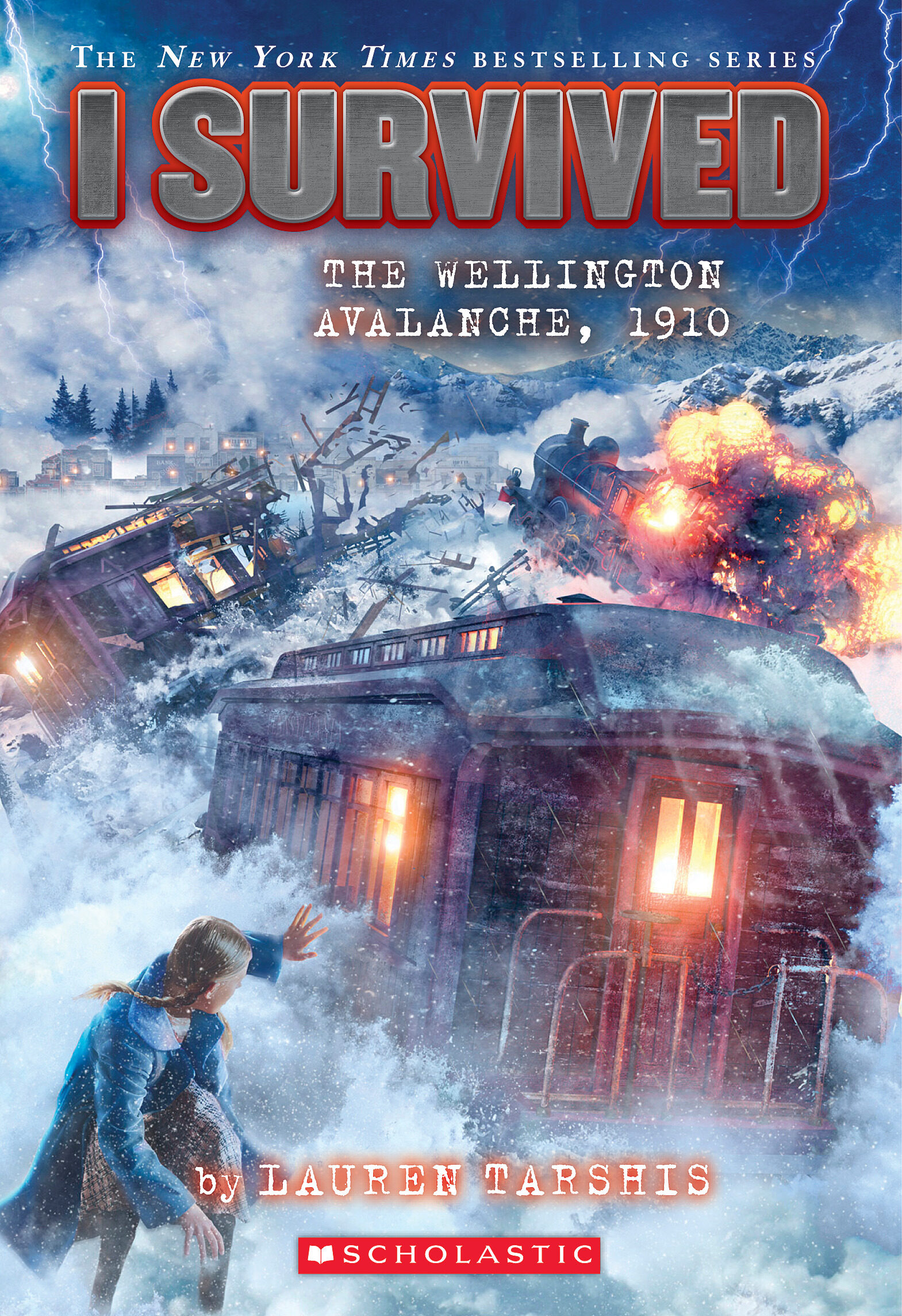
152. I Survived the Wellington Avalanche, 1910


I Survived the Wellington Avalanche, 1910. (I Survived #22) Lauren Tarshis. 2022. 144 pages. [Source: Library]

First sentence: RRRRRRRRooooooar! The earsplitting explosion shook the ground. Eleven year old Janie Pryor swung her head around and stared in horror. The mountain above her seemed to have shattered apart. A massive wave of icy snow was crashing down. An avalanche! For the past six days, Janie had been stuck in this stormy wilderness.

Premise/plot: Janie Pryor is the "I" in Lauren Tarshis' newest I Survived historical novel. The event is an avalanche that led to a disastrous tragedy. 

If you've read one I Survived novel, you've got a fairly good idea on what to expect in this latest installment. 

My thoughts: I don't always appreciate the drama of the I Survived books, but, this one I must admit had me at the edge of my seat from start to finish. This event, I'm guessing, is NOT well known with the intended audience. (Unlike say the Titanic, Hurricane Katrina, or 9/11.) Perhaps it is not even well known with older readers--adults. If history classes covered events like this one, would history classes be better appreciated???? Perhaps. (But I digress.) 

The story is compelling. Not just the natural disaster aspect--which is inevitably intense--but the personal drama as well. I would explain what led Janie to being on the train in the first place, but, I don't want to have spoilers in this review. Usually the secondary side stories are a bit silly, at least in my opinion, but I didn't find that so in this newest book.

Definitely recommend this one.


© 2022 Becky Laney of Young Readers

Friday, July 22, 2022

105. The Titanic (Survival Tails #1)


Survival Tails #1: The Titanic. Katrina Charman. Illustrated by Owen Richardson. 2018. 224 pages. [Source: Library]

First sentence: The rain fell softly, swirling around the small garden to land on Mutt's wiry, dull brown fur. It was the kind of rain that seemed barely there at all when you looked out from the dry comfort of indoors--little more than a mist on the wind. But when you had no choice but to be out in it, it was almost as wet as a full-pelt downpour.

Premise/plot: Animal fantasy set during the voyage of the Titanic in April 1912. That is the premise--short and sweet. This novel is narrated by two animals: Mutt (the dog) and Clara (the cat). Plenty of other animals star in this historical animal fantasy as well. (Three kittens and a rat). Mutt is distraught that Alice (his girl) and Master (Alice's father) are leaving for America and sailing on the Titanic. Distraught that he's being left behind. It doesn't seem fair--not to Alice and not to Mutt. So he decides to stowaway on the ship. But it isn't easy to sneak aboard, and this requires help from a brand new friend, a rat, King Leon. Clara, meanwhile, belongs to the Captain. (Or perhaps the Captain belongs to her.) She discovers three kittens on board. They are wanting/needing/mewing for their mother--who is nowhere to be found. Clara is not a mama cat--never has been, never will be--but she takes an interest in these three. Not forever, but just for a few days. Clara and Mutt (and King Leon and the three kittens, Violet, Jack, Cosmo) do meet eventually. But the Titanic, well, it isn't smooth sailing to say the least...will ANY of these animals survive????

My thoughts: Sensitive readers should go with their instincts. This one doesn't just feature one dog on the cover--whose life could be in peril--but a cat, three kittens, and a rat. Definitely animal fantasy. These animal characters know a LOT. Not just animal-y things that you could easily imagine but a wide spectrum of knowledge that will conveniently come in useful when the Titanic runs into big trouble. 

I definitely liked this one. I would have absolutely hated it as kid. But that would have been all pre-judgement on my part. I would have never picked this one up ever, ever, ever. I would have avoided it at all costs. 

The story flows well. The pace is great. Plenty of will-they-or-won't-they suspense--will these animals (whom you've come to love) survive?????  

I do think sensitive readers may be upset with how this one ends. But it isn't 100% happy or 100% tragic. It is a bittersweet ending that probably is about the best you can expect.


© 2022 Becky Laney of Young Readers

Tuesday, September 21, 2021

149. I Survived the Galveston Hurricane, 1900


I Survived the Galveston Hurricane, 1900. (I Survived #21) Lauren Tarshis. 2021. [September] 144 pages. [Source: Library]

First sentence: Noooooooo! A powerful blast of wind grabbed hold of eleven-year-old Charlie Miller and threw him into the raging flood.

Premise/plot: This title is the newest in Lauren Tarshis' ever-popular I Survived Series. Charlie Miller lives with his family on Galveston Island. He loves his family, loves learning magic, HATES being bullied. (Gordon Potts is one reason why he's not looking forward to starting school again.) But life on the island is about to go topsy-turvy.

My thoughts: I have read a couple of adult titles on the Galveston Hurricane of 1900. I have found them fascinating, disturbing, compelling. While the complexities of the story are tamed down considerably for this children's book, it is still a good read. The majority opinion on the island at that time--and in at least some "scientific" circles was that a hurricane could not happen there. That Galveston was safe--as is. That no evacuation would be necessary. It sounds so silly, so presumptuous with hindsight, doesn't it?!?!

I liked this addition to the series.

© 2021 Becky Laney of Young Readers
Saturday, August 7, 2021

109. Rosetown Summer


Rosetown Summer. Cynthia Rylant. 2021. [July] 96 pages. [Source: Library]

First sentence: Rosetown Paper and Press sat on Main Street in Rosetown, Indiana, and it was one of Flora Smallwood’s favorite places to be. The shop belonged to Flora’s mother and father, and all of its beautiful cards and calendars and journals had been printed on an old-fashioned letterpress in the back room.

Premise/plot: Yesterday I reviewed Rosetown by Cynthia Rylant. Rosetown Summer is the sequel. It is set in the summer of 1972 in Rosetown, Indiana. Fourth grade is complete, and Flora and Yury have the whole summer ahead. But change is coming...the owner of Wings and a Chair Used Books may be moving away!

My thoughts: I loved, loved, loved the first book. I love, love, love this second book. Flora and I are just kindred spirits I tell you. Except FLORA is better with glue. Definitely better at glue! This was just a treat of a book.

Quotes:

Yury says I should write stories,” Flora said. “But I’d rather read them.”
Her father nodded. “I’d rather look at photographs than take them,” he said.
“Really?” asked Flora.
“But I guess if all photographers felt that way,” answered her father, “we wouldn’t have any photographs to look at.”


The bookshop had, in many ways, become their story, Flora and Yury’s. Every story needs a setting and a beginning, and Wings and a Chair had given them both.

“Is Miss Meriwether going to move away?” she asked her mother. Flora wasn’t sure she really wanted to know the answer. When a question is so big inside one’s mind, sometimes a person does not really want to know its answer.
Her mother sighed. She looked away a moment, then looked back at Flora.
“She seems torn,” Flora’s mother said. “Miss Meriwether is at one of life’s crossroads: to stay or to go. This is a problem many people face.”
Flora shook her head. “Not me,” she said. “I would always choose to stay.”
Her mother smiled. “But if you aren’t at a crossroads yet, dear,” she said, “how can you know? Sometimes a person really must choose between two good things.”
Two good things, thought Flora.
“I would choose the thing that involved a cat,” she said.
Her mother laughed.

“Could I help you with Toddler Story Time until school starts?” she asked, looking partly at his large friendly face and partly at the craft table in the far corner.
“I am good with glue,” she added.
Mr. Anderson hesitated for just a moment, and then he laughed.
“You’re hired!” he said. “I am terrible with glue!”

Mr. Anderson was pleased to see her.
“Good morning, Flora!” He beamed at her. “Are you ready to get started? We need lettuces and carrots and paper pails to put them in. Here, let me show you.”
And just like that, Flora stepped from the old to the new. Here she was, by herself, being Flora in a different way. She could hardly believe it. This thing she was doing alone.


“Do you remember the story of Peter Rabbit?” Flora asked Nessy.
“Sure,” said Nessy. “He squeezed under the gate.”
“He did,” said Flora. “Mr. Anderson read it to the toddlers today, and they listened to every word. Two little girls held hands while they listened.”
“That was us,” said Nessy with a giggle.

Flora regarded this necklace as something so meaningful that she had carefully put it away and planned to wear it only on special occasions.
So why she decided to start wearing it every day during these ordinary last days of summer, Flora wasn’t sure. One morning she opened a dresser drawer, removed the box, and put the necklace around her neck. And now she did this every morning.
There is a meaning to some things that a person cannot always define. When an object has some link to the heart, it is often because it came from someone dear or was loved by someone dear who has passed away. Or sometimes the object is a treasured reminder of an experience: a winning game, the first sight of the ocean, a project carried through with intense devotion.


“Did you know that people used to ride horses to the bank in Rosetown?” she asked him. She would have to think all of her many thoughts later.
“You have told me that a million times,” said Yury with a smile.
Flora smiled too. They had spent a lot of time together if a story had been shared a million times. A lot of time. Enough for a foundation.
Flora bent over and gave Friday a big hug.
Maybe someday she would take Yury to see the Tree of Life.
But for now it was almost time to start fifth grade.
What a beautiful day this was. In Rosetown, Indiana.

© 2021 Becky Laney of Young Readers

Saturday, July 24, 2021

86. I Survived the Sinking of the Titanic, 1912


I Survived The Sinking of the Titanic, 1912. Lauren Tarshis. Illustrated by Scott Dawson. 2010. 112 pages. [Source: Library]

First sentence: The Titanic was sinking. The gigantic ship had hit an iceberg. Land was far, far away. Ten-year-old George Calder stood on the deck. He shivered because the night was freezing cold. And because he was scared. More scared than he'd ever been before.

Premise/plot: George, our young hero, is sailing with his sister, Phoebe, and his Aunt Daisy on board the Titanic. The good news? The title reassures readers that George will in fact survive to tell the tale. The bad news? Well, the other characters may or may not be so lucky. (After all, this isn't We Survived The Sinking of the Titanic.) 

The book chronicles George's last day on the Titanic (well, really more like the last day and a half). During this time, he fits in a flashback with a panther. (I'm not lying).

My thoughts: I would respect the I Survived series more if they didn't try to do too much. Like fit in a flashback episode with a panther. I remember another I Survived story fitting in a flashback with a rattle snake (or possibly another kind of dangerous, poisonous snake). Because if you're in the middle of a blizzard, of course, you're going to take your mind off of it by thinking about snakes. I've only read a handful of books maybe there are more examples? Maybe these are two rare exceptions? Quite possibly I'm just not the target audience for these! 

I do like the humor and lightness of this one. There's not really a sense of DREAD and DOOM. After having read a YA book where there is an overwhelming sense of dread and doom, it was a relief to take a few steps back and settle into a book where there's some comfort in knowing that the book characters aren't going to die even if they are on the Titanic.

It's not that I disliked the book or thought it awful--I didn't. I will say that ANY book (or almost any book) that gets a young person interested in both a) HISTORY and b) reading history and historical fiction is worth it. I mean that.

© 2021 Becky Laney of Young Readers

Thursday, January 21, 2021

7. My Chocolate Year


My Chocolate Year: A Novel with Twelve Recipes to Make Your World A Little Sweeter. Charlotte Herman. Illustrated by LeUyen Pham. 2008. 176 pages. [Source: Review copy]

First sentence: "Fifth grade with Miss Fitzgerald is going to be the best grade ever!" I said to my friend Sunny Shapiro as I tried balancing myself along the curb.

Premise/plot: Dorrie Meyers stars in this lovely coming-of-age novel set during the 1945/46 school year in Chicago, Illinois. The war has ended, but its effects are far from over: especially for this Jewish American family. 

Dorrie hears or overhears much. Her family is concerned about their relatives in Europe. Did they survive the war? Were they among those murdered by the Nazis? Not knowing weighs on the family. Dorrie is just getting to the age where she's thinking beyond herself to others. But much of her thinking is consumed with the SWEET SEMESTER. Mrs. Fitzgerald, a fifth grade teacher, is known for putting on THE SWEET SEMESTER, a celebration of their time spent together. Each student brings ONE DESSERT that they prepared all by themselves. An essay is also involved. A 'best' dessert and 'best' essay will be recognized...

My thoughts: I enjoyed this historical middle grade novel! I did. It follows the whole school year. It contains plenty of family scenes and school scenes. I loved the characters. I loved the story. I would definitely recommend this one.

As far as age appropriateness--that depends on the child. Readers learn through the dialogue of the characters the fate of some of the extended family. To the overly sensitive child who has never learned anything at all about the Holocaust, it may come as a bit of a shock. It is not melodramatic or manipulative, in my opinion. The fate of those relatives is not the one and only point of the novel. 

You certainly can't please everyone. As I'm scrolling through the reviews on GoodReads I'm struck by two camps: HOW DARE A BOOK ABOUT CUPCAKES TALK ABOUT THE HOLOCAUST vs. HOW DARE A BOOK ABOUT THE HOLOCAUST TRIVIALIZE IT BY TALKING SO MUCH ABOUT CHOCOLATE. Life is complex. A girl can both LOVE, LOVE, LOVE desserts and spending time with her family and friends and listening to her most favorite radio programs AND be concerned about her extended family. 

© 2021 Becky Laney of Young Readers

Saturday, November 14, 2020

113. Stranger on the Home front


Stranger on the Home Front. Maya Chhabra. 2021. [January] 160 pages. [Source: Review copy]

First sentence: Margaret Singh and her family were late, as usual. They came to Stockton from San Francisco every year for the festival, and every year they got lost somewhere between the train station and the gurdwara. Margaret’s stomach rumbled, but there wouldn’t be any food till they got there. Father stopped a couple of passersby to ask for directions. “Excuse me, do you know where the Sikh temple is?” One of the strangers looked like he was going to say something impatient, but then he caught sight of Margaret and Mother. He looked at them curiously, as if putting two and two together—Father, the clean-shaven East Indian, wearing a hat rather than a turban; Mother, the white woman; and Margaret, their daughter. Margaret had watched people go through this process a thousand times. A man from India with a white wife was an unusual sight in California. 

Premise/plot: Stranger on the Home Front is historical fiction; it is set in California roughly 1916 through 1918 or possibly 1919. The heroine, Margaret, is the daughter of an Indian immigrant. Her father strongly desires independence for India. But how far will he go to support a revolution or break from British rule? The book isn't solely about her father's dream for India. Largely it is about Margaret's desire to truly belong--just as she is--within her community, her school, her country. 

Margaret has a best friend, Bettina, is of German descent and things are getting rough for her as well. 

My thoughts: I enjoyed this one. It does bring back memories of the Dear America series. (I think this is a good thing.) It is set during World War I. (The two world wars are of special interest to me). I like the focus on home life and school life. It does include a glossary at the beginning of the novel. 


© 2020 Becky Laney of Young Readers

Monday, June 1, 2020

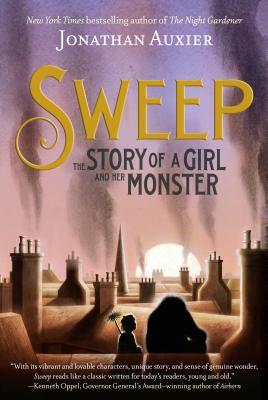
65. Sweep

Sweep: The Story of a Girl and Her Monster. Jonathan Auxier. 2018. 368 pages. [Source: Library]

First sentence: There are all sorts of wonderful things a person might see very early in the morning.

Premise/plot: Nan Sparrow, our heroine, is a chimney sweep; one of many. When we first meet her in the opening pages of Auxier's novel, she's in the employ of Wilkie Crudd. She wasn't always. In her vaguest, fuzziest memories, Nan remembers the Sweep, the man who raised her and taught her everything he knew. Those dreams of the past haunt her in a lovely way, for the most part. She tells stories about the Sweep almost making him legendary among the other children. His physical legacy to her was small--a small piece of coal and a hat--but his legacy was priceless in ways no one could have foreseen.

When she needs help the most--in her DARKEST hour--help comes from an unusual source, that small lump of coal. For that coal--once burned--becomes a living being, a golem of soot, if you will. She names him Charlie.

The story is fantastical and memorable.

My thoughts: I loved, loved, loved this one. I hesitate to share too much of its plot for just that reason. This one is best read without knowing all the ins and outs. (Some books are; some aren't.) It was a book to be experienced. It was a book with depth and substance. The writing is delightful in that it sweeps you up, up, and away. But the story itself is bittersweet. There's nothing cutesy and adorable about children living in such poverty and in such cruel situations.

I will need to reread this one. Perhaps even this year.

ETA: Funny how you can read the same book twice and have different reactions each time. I didn't love, love, love it the second time around. I liked it certainly. I found it well worth reading. But I didn't get swept up in the story. The other books I've reread by Auxier have held up better.

© 2020 Becky Laney of Young Readers

Monday, May 11, 2020

60. A Long Road on a Short Day

A Long Road on a Short Day. Gary D. Schmidt. Elizabeth Stickney. Illustrated by Eugene Yelchin. 2020. [November 2020] 64 pages. [Source: Review copy] [winter; family; historical]

First sentence: Early on a white January  morning, Samuel’s mother said, “I do wish we had a brown-eyed cow to give us milk for the baby.” Samuel’s father set down his mug. “And for your tea,” she said. Samuel’s father smiled and got up from the table.

Premise/plot: Samuel and his Papa go on a LONG ROAD ON A SHORT DAY as they seek to trade their way to getting a milk cow to please Mama.

My thoughts: Such a simple plot. Such a JOYOUS story. I know it's only May. I know that I may read dozens of more stories that I may come to love more than this one. But. I can't help thinking THIS SHOULD WIN THE NEWBERY. Here's the thing: simple can be oh-so-complex to get right. Because you'll never convince me that every word, every line isn't carefully, meaningfully chosen to accomplish that JUST RIGHT feel.

I loved the text. I loved the characters. I loved the plot. I loved the illustrations. This is a gem of read. I want to hold it in my hands and read it again and again and again and again.


© 2020 Becky Laney of Young Readers

Tuesday, May 5, 2020

58. Family Reminders

Family Reminders. Julie Danneberg. Illustrated by John Shelley. 2009. 112 pages. [Source: Review copy] [historical fiction]

First sentence: "It's going to be a warm one, Mary. An Indian summer day," Daddy said to me as he got up from the kitchen table and slugged down his last gulp of coffee.

Premise/plot: Family Reminders is historical fiction set in Cripple Creek, Colorado, in the 1890s. It is a mining community, and the novel opens with an accident at the mine. Mary's father is injured at the mine. The novel is told through her perspective and captures how this one family moves on from this tragic even. It will be a struggle. But together as a family...they can do anything, right?

My thoughts: I enjoyed learning that it is loosely inspired on the author's grandmother's family. I love historical fiction. I have very fond memories of family vacations in Colorado. I enjoy family stories with a lot of heart and soul. This one was just a perfectly perfect fit for me. I absolutely loved, loved, loved the black and white illustrations by John Shelley. They give the book a charming, old-fashioned feel. 

© 2020 Becky Laney of Young Readers
Wednesday, April 1, 2020

46. Prairie Lotus

Prairie Lotus. Linda Sue Park. 2020. 272 pages. [Source: Library] [historical fiction; j fiction]

First sentence: “Should be our last day,” Papa said when they stopped to make camp.

Premise/plot: Hanna and her father are newly moved to Dakota territory; the year is 1880. Her dad will be opening up a dress goods shop once the building is completed. Hanna, meanwhile, hopes to graduate with her diploma and fulfill her mom’s dream. But it won’t be easy because Hanna is half-Chinese. There is some question whether she’ll be allowed to attend school. She doesn’t need the diploma, but she wants it. Her dream is to be a dress maker, a seamstress.

My thoughts: I loved this one so much. As I was reading this one I kept asking myself, are these characters inspired by Little House?! In particular the social scenes with the other kids. I was so pleased to read the author’s note and learn that yes she was inspired to write her own twist to Wilder’s books. Growing up, Park wanted to be Laura’s best friend. As she continued to grow and mature she realized that Laura probably would not have been allowed to be her friend. That Ma would have probably looked down upon her, that her prairie experience would have been completely different—even more challenging. What would it be like to be an Asian pioneer?! Plenty has been written about Chinese settlers in California, but this may be the first—probably is the first for young children—about settling further East.

I found the book to be well written, and the characters well drawn. I loved that Hanna was able to make friends with Bess! 


© 2020 Becky Laney of Young Readers

Monday, March 30, 2020

45. War Is Over

War Is Over. David Almond. David Almond. Illustrated by David Litchfield.  2018/2020. Candlewick Press. [Source: Review copy] [Children's Book; Historical fiction; world war I; world at war]

First sentence: John first saw Jan, the German boy, on the day of the visit to the munitions factory.

Premise/plot: John, our young hero, barely remembers his father who is away fighting in the Great War (aka World War I). His mother--like many other mothers, many other women--is working at a factory. John's mother is working at a munitions factory. John is told by many different people, many different times that he too is at war though he is but a child. He is being told that he should hate his enemies--the Germans--and pray for their destruction and the end of the war. But John has a hard time putting this into action. Aren't the Germans people too? Don't the German soldiers have little boys and girls at home? Don't the German wives miss their husbands? John isn't the only one questioning the war...others of all ages are protesting too.

My thoughts: The text itself doesn't explicitly say that this is set in England during the first world war--1914-1918. It wasn't until I was reading the summary on GoodReads that it was confirmed that it definitely was World War I. I was hoping that this was the case. Because if it was about the second world war, I would have had MAJOR, MAJOR, MAJOR issues. What we do learn from the text is that the enemy is Germany.

I wouldn't say this is my least favorite war book with the "agenda" that WAR IS BAD and that no war is worth fighting or justifiable. (I'm not pro-war. I'm just not anti-war. I think sometimes war is the last and only solution. In other words, some wars are sometimes mostly justifiable.) Knowing that it is specifically about World War I, helped me calm down from my initial reaction.

Quotes:
“They are German children, children. I have been there. I have seen them. They are children, just like you. They have fathers, they have brothers, they have sisters, they have mothers just like you.” Then he was down on the ground and the papers were scattered and the men were punching and kicking and McTavish was guiding the children away. “There are no monsters!” yelled Gordon in a strangled voice. “There are only lies! There is no need for war!” 

© 2020 Becky Laney of Young Readers

Thursday, March 19, 2020

42. Orphan Train Girl

Orphan Train Girl. Christina Baker Kline. 2017. 234 pages. [Source: Library] [Children's Adaptation of an Adult Book; j fiction; j historical fiction; j realistic fiction]

First sentence: “Well,” Jack’s mom says from the driver’s seat. “This is it.”

Premise/plot: Molly, our contemporary heroine, is in foster care. She’s a young teen girl with defenses in place, a definite “bad” attitude as far as most adults are concerned. But Vivian, our senior heroine, isn’t most adults. She knows what it’s like to be an orphan, to be bounced around from home to home, unwanted and easily blamed, prone to being misunderstood. She came with her family from Ireland. Her family perished in a fire. She soon found herself on a west bound orphan train heading to the Midwest. Both stories unfold as the two clean up an attic.

My thoughts: At first I was impatient with this one. I fell so hard for Niamh-Dorothy-Vivian’s story that I didn’t want to be bothered with the contemporary story. Then I realized that some things haven’t changed all that much. Molly’s experiences in foster care aren’t all that different from Vivian’s on the orphan train and perhaps more importantly Molly’s story realistically represents some modern foster kids. There certainly isn’t one universal experience for the foster care experience, but some kids do get bounced around, moved around, rejected, face criticism, bullying, and even abuse. Some kids are wanted and adopted. Some find the happily ever after dream with a caring family. But many don’t. Holding onto hope when you could just as easily age up out of the system without experiencing unconditional love and a sense of belonging can be tough. Everyone needs to feel seen, loved, known. Molly isn’t—at least at the start of this one. Vivian and Molly connecting felt magical.


© 2020 Becky Laney of Young Readers

Monday, January 7, 2019

Real Stories From My Time: Pearl Harbor

Nanea, Real Stories From My Time: Pearl Harbor (American Girl) Jennifer Swanson. 2018. Scholastic. 112 pages. [Source: Review copy]

First sentence:  When most people think of Hawaii, they picture a lush, tropical island with miles of sandy beaches and palm trees swaying in the warm breeze--and that picture is pretty accurate!

Premise/plot: This AmericanGirl chapter book blends nonfiction and fiction together to teach young readers about the bombing of Pearl Harbor.

The first three chapters give young readers a background on Hawaii. The remaining chapters focus on the attack itself and the aftermath.

Most chapters include a brief section set apart as Nanea's Story. This fiction story is set in a different font. There's no mistaking what is fiction and what is nonfiction in this one.

My thoughts: I haven't read many--if any--American Girl chapter books. I liked this one. Part of me can't help wishing that it was all nonfiction or all fiction. The Magic Treehouse series, I believe, often has a fiction book and a nonfiction companion book that go together.

Original audience born circa 2009 to 2011. 

© 2019 Becky Laney of Young Readers

Friday, April 13, 2018

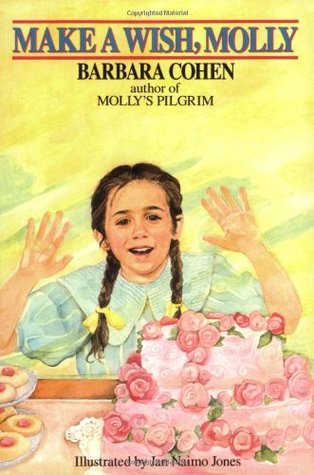
Make A Wish, Molly

Make A Wish, Molly. Barbara Cohen. 1994. 48 pages. [Source: Bought]

First sentence: I didn't know about birthdays. In Russia we hadn't celebrated birthdays. But I learned once we came to Winter Hill. I had started school in the fall, and I'd hated it. But by spring I didn't hate it anymore. That's because I had a friend. Her name was Emma. Her desk was next to mine.

Premise/plot: Molly gets the chance to learn about birthdays--and birthday parties--in this early chapter book by Barbara Cohen. But perhaps more importantly she gets the chance to learn something about herself.

Molly sees a BEAUTIFUL decorated cake in a shop window. Her friend says she'll have a cake like that and her birthday party in a few weeks. Molly might get a chance to taste such a delectable cake for herself--it seems almost too good to be true.

Unfortunately, the birthday party takes place during Passover week. Molly does NOT want to take her own food to snack on--not while her friends are enjoying that incredible cake. Could she--should she--eat the cake anyway?

My thoughts: What a lovely little story! It's historical fiction--presumably early to mid-twentieth century. The family of our wonderful little heroine is Jewish--recently arrived from Russia. Their traditions are not the same as everyone else. Part of Molly longs to fit in no matter what. Coming-of-age novels address the question who am I? This does just that. I loved Molly's confidence by the end of the novel!

© 2018 Becky Laney of Young Readers

Friday, March 23, 2018

A Gift for Mama

A Gift for Mama. Esther Hautzig. 1981/1997. Penguin. 64 pages. [Source: Bought]

First sentence: Sara was sick and tired of making presents. And Mother's Day was coming. For birthdays and for Hanukkah, for anniversaries and for Mother's Day, Sara always had to make a gift. Mama said that the best presents were handmade presents.

Premise/plot: Sara, our heroine, has determined that she will BUY her mother a present this year. This won't be easy. She doesn't have an allowance. She doesn't have money saved up. She has nothing but her determination--her grit--to find a way to make it happen. She knows exactly what she wants to buy her mother--a pair of slippers that her mother has admired from a store's window display. She knows exactly how much they cost--nine zlotys. How resourceful can one girl be?

My thoughts: The setting of this one is very understated. I believe it is set in Poland in the 1930s. It stars a Jewish family in a Jewish community. The focus isn't on HISTORY or DANGER or THREATS. The focus is on family--immediate and extended. The focus is on relationships. I love seeing how close Sara is to her aunt, Margola. I LOVED, LOVED, LOVED seeing their bond. And Sara also has a close relationship with her grandmother. This is without a doubt a character-driven story. And it packs a lot of emotion and intensity into its pages.

For better or worse, the Mama of the family--whom Sara LOVES--seems to have some big issues, unresolved issues from her past. And she's far from perfect. But just because she's far from perfect--in our eyes--doesn't make her any less loved by Sara or any of the rest of her family.

I could relate to Sara--her stubbornness, her sensitivity, her wearing her heart on her sleeve, her feeling emotions so deeply and intensely. Sara is the exact opposite of her mother in so many ways. But love connects them even if communicating by words--even actions--doesn't. I think that you could say they speak different love languages.

I'm not sure what I would have thought about this one as a child, but I could relate to it as an adult. 

© 2018 Becky Laney of Young Readers

Thursday, July 22, 2010

I Survived the Titanic


I Survived The Sinking of the Titanic, 1912. Lauren Tarshis. 2010. Scholastic. 112 pages.

The Titanic was sinking. The gigantic ship had hit an iceberg. Land was far, far away. Ten-year-old George Calder stood on the deck. He shivered because the night was freezing cold. And because he was scared. More scared than he'd ever been before.

George Calder, our hero, has been in and out of trouble most of his life. No one loves adventure more than George. He's a curious boy with a love of adventure and mystery. He is on this trip with his sister, Phoebe, and his aunt, Daisy. And he's loved every minute of it. Loved exploring it top to bottom and everywhere in between. True, he hasn't always behaved as he should. And that's true even when the ship hits the iceberg. He's out of his bed exploring. But nothing really prepared George for this. For the life-or-death adventure he is facing with thousands of other passengers.


© Becky Laney of Young Readers