Showing posts with label fairy tales. Show all posts

Wednesday, July 19, 2023

194. Cinderella With Dogs


Cinderella with Dogs! Linda Bailey. Illustrated by Freya Hartas. 2023. 32 pages. [Source: Library] [Picture book; fairy tale adaptation; humor; dogs and cats]

First sentence: Poor Cinderella, lonely and sad, was sweeping the ashes from the fireplace. Everyone else had gone off to the ball to dance. She had to stay home--and work! Poor Cinderella never went anywhere. She never had a single bit of fun. Ever! "If only I had a fairy godmother," she said. 

Premise/plot: A Cinderella retelling with a fairy DOGmother! This fairy dogmother has her own ideas of how to fulfill Cinderella's wishes. And her ideas include CHASING SQUIRRELS, running, playing, fetching ball, etc. Will this dog-loving Cinderella still make an impression at the dance? Yes....just maybe not in the traditional way.

My thoughts: I enjoyed this one. I loved seeing all the cats, dogs, and squirrels. I loved the humor. I loved the twists. It was an enjoyable, delightful fairy tale adaptation. I think my favorite part was her 'transformation' by her dogmother! 


© 2023 Becky Laney of Young Readers

Friday, November 18, 2022

196. Too Many Pigs and One Big Bad Wolf


Too Many Pigs and One Big Bad Wolf: A Counting Story. Davide Calì. Illustrated by Marianna Balducci. 2022. [September] 36 pages. [Source: Library]

First sentence: Once upon a time, there were three little pigs. Then the wolf ate them. THE END.
This story is too short! I want a longer one! Once upon a time, there were four little pigs. The wolf ate the first three. Then he ate the fourth, but it took longer because that pig was bigger. THE END. This story is STILL too short. There must be other things happening! Once upon a time, there were five little pigs. The wolf ate the first, then the second, then third, fourth, and fifth. Meanwhile, there was a carnival in the woods. THE END. The little pigs always get eaten too fast! And what does a carnival have to do with anything?

Premise/plot: The big, bad wolf gets to eat a LOT of pigs in this imaginative retelling of the traditional folk tale. The little pigs are bantering with the narrator about the story, about how it is unfolding, and they are not at all happy. However, the narrator seems to be #teamwolf. The narrator mainly seems focused on making sure the wolf is HAPPY and FULL. How many pigs can a wolf eat???

My thoughts: I thought this one was SO MUCH FUN. Fairy tale adaptations can be a hoot. Not always. It's not a guarantee. There have been adaptations and retellings that have not been all that great. But this one, well, it is just fun. (As long as you are not one of the pigs]. 

The book is written as a dialogue of sorts. The text in red represents the pigs. The text in black is the narrator. Two people [adult and child] could easily read this one together. Of course, it doesn't have to be read that way. It would also, I imagine, be great to read aloud in a classroom or library setting. The story is VERY predictable which can be a great thing for this age group.

© 2022 Becky Laney of Young Readers

Sunday, October 2, 2022

153. The Unusual Suspects (Sisters Grimm #2)


The Sisters Grimm: The Unusual Suspects. Michael Buckley. Illustrated by Peter Ferguson. 2005. 292 pages. [Source: Library]

First sentence: "Let's get this party started, already" Sabrina complained under her breath as she rubbed the charley horse in her leg. She and her seven-year-old sister, Daphne, had been crouching behind a stack of Diaper Rash Donna dolls for nearly three hours. She was tired, hungry, and more than a little irritated. For a week, they had been on this "stakeout" and it was beginning to look as if they had wasted another perfectly good night of sleep. Even Elvis, their two-hundred-pound Great Dane, had given up and was snoring on the floor next to them. Of course, how Sabrina wanted to spend her time wasn't really considered, she had learned, especially if there was a mystery afoot. 

Premise/plot: The Unusual Suspects is the second in this mystery-fantasy series by Michael Buckley. This line from the opening chapter sums up the series (and this title) quite nicely. "In most towns, the police do not rely on an old woman, two kids, and a sleepy dog to solve crimes, but Ferryport Landing was no ordinary town. More than half of its residents were part of a secret community known as the Everafters. Everafters were actually fairy-tale characters who had fled Europe to escape persecution. Settling in the little river town almost two hundred years ago, they now used magical disguises to live and work alongside their normal neighbors. Ogres worked at the post office, witches ran the twenty-four hour diner, and the town mayor was the legendary Prince Charming. The humans were none the wiser--except the Grimms. As fantastic and thrilling as it sounded to live among fairy-tale characters, it wasn't a dream come true for Sabrina Grimm. Being the last in a long line of Grimms (descended from the famous Brothers Grimm), she and her sister had had the family responsibility of keeping the peace between Everafters and humans thrust upon them no less than three weeks ago. And it wasn't an easy job."

Our story begins roughly three weeks after Fairy-Tale Detectives concluded, the two sisters are still adjusting to their new home. Still adjusting to living with 'the big, bad wolf' in his disguise as Mr. Canis. Still adjusting to their new stepbrother of sorts, the infamous Puck. But even more change is on the way: the two must begin attending school OR they'll be taken back into foster care and into the care of the dreaded Ms. Smirt. Changing schools is difficult for most kids, but it becomes even more challenging in Ferryport where some of the staff are Everafters...and some of the students are children of Everafters.

Sabrina had been to a lot of schools in the last year and a half, and they all had a few things in common. Every one of them had a couple of grouchy teachers, a bully, a bully's punching bag, a weird cafeteria lady, a bathroom that everyone was afraid to go into, and a librarian who worships something called the Dewey Decimal System. None of those schools, however, had a teacher-killing monster scurrying through its hallways. And they said New York City had everything. (90-91).
Even with all of the new adventures and mysteries to solve, Sabrina cannot and will not forget her most important mission: she's determined to find her missing parents and the Everafters responsible for their disappearance. But is her anger and frustration even more dangerous than she knows??? Find out in this second exciting installment of The Sisters Grimm.

My thoughts:  I am enjoying rereading this series. It has been over a decade (closer to fifteen years) since I first read this series. It is so enjoyable! I love the humor. I love the characters. This series started long before Once Upon A Time (the show) began. It is a super fun concept or premise. While it is highly unlikely the series would ever be adapted into a television show, I still think it would be fun.

© 2022 Becky Laney of Young Readers

Friday, June 3, 2022

62. Endlessly Ever After


Endlessly Ever After: Pick Your Path to Countless Fairy Tale Endings. Laurel Snyder. Illustrated by Dan Santat. 2022. 92 pages. [Source: Library]

First sentence: Your mama shakes you out of bed. She says, "My darling dear, you need to run to Grandma's quick! She's feeling ill, I fear. Now take this cake, to cheer her up, and have a lovely day. But mind the path! For danger tends to lurk along the way." 

Premise/plot: This picture book is a choose your own adventure fairy tale. Readers become "Rosie" the heroine of more than a dozen (honestly I did NOT count so don't hold me to that) fractured fairy tales. The first decision you, dear reader, must make is whether to wear the RED CAPE or the faux fur coat. But that is just the beginning of the decisions readers are called upon to make. Some story threads end quickly--very, very quickly. (For example, one decision has you heading straight back to your own house to try again another day!) But beware, not all decisions end happily ever after. In fact, quite a few end up with you (the reader) dying. 

This choose your own adventure book begins like Little Red Riding Hood, but how it ends is up to you. Plenty of paths borrow from other fairy tales. (So many fairy tales!)

My thoughts: I'm still not sure if I explored EVERY path of this one. I tried. I think if I had a print copy in hand instead of an e-book (library checkout), I'd have made sure I tried EVERY SINGLE path. Clicking the links worked way better than I thought, to be fair. But it's just hard to keep track of every crossroad. Usually I read choose your own adventure books with a notepad and pen...and a handful of paper scraps. I mark each crossroad, I plot out every possible combination. (I sometimes indicate which paths lead to quick ends.)

I liked this one. I did. I really loved the creativity of it. I enjoyed the text, for the most part. It was entertaining. I could see how this one could be appealing to kids in various situations--at home and at school. I could see this being great to read on your own OR great to read aloud, just parent-and-child. I could see this being fun to add to your home library or your classroom library. Fairy tale units are still a thing, so this could be a fun addition. 

I didn't personally love the illustrations. That is not a deal breaker for me.

© 2022 Becky Laney of Young Readers

Monday, November 22, 2021

167. Little Red and the Cat Who Loved Cake


Little Red and the Cat Who Loved Cake. Barbara Lehman. 2021. [November] 64 pages. [Source: Library]

Little Red and the Cat Who Loved Cake is a wordless picture book. Mostly. There are technically words in this narrative free picture book, but the words are on signs, shirts, etc. It appears to be set in a fractured fairy tale world where all fairy tale characters mix and mingle. Little Red is delivering a cake to Grandma. But Little Red's CAT comes along--secretly or not so secretly. The cat is fairly insistent to be included in any eating of cake.

If I had known BEFORE borrowing from the library that it was a wordless picture book, I would have not checked it out. To be honest, I need words in my stories. It isn't that it is impossible for stories to be told without words, but all the best of the best stories have words. Even if the text is super-simple and just a few words per page--think of Max's communication skills in Max and Ruby--I need words.

But I was drawn to this one because of the word CAT in the title.

I thought the super-playful and "sneaky" cat was cute. Is the cat trying to steal cake enough of a gimmick to make me love a wordless picture book???? Probably not.


© 2021 Becky Laney of Young Readers.

Wednesday, July 22, 2020

79. The True Story of The 3 Little Pigs

The True Story of the 3 Little Pigs. Jon Scieszka. Illustrated by Lane Smith. 1989. 32 pages. [Source: Library]

First sentence: Everybody knows the story of The Three Little Pigs. Or at least they think they do. But I'll let you in on a little secret. Nobody knows the real story, because nobody has ever heard my side of the story.

Premise/plot. A. Wolf (the narrator) wants readers (like you and me) to know the TRUTH. He is not a BIG BAD WOLF. He's not. Here's why: he was simply going to his neighbors' to ask for a cup of sugar. Why? Well, it was all for the best of causes: his dear granny's birthday cake. True, his neighbors all happened to be PIGS. But his intention was for SUGAR, AND SUGAR ALONE. It's not his fault that he had a cold and that his POWERFUL SNEEZES took out the first two pigs' houses. And it's not his fault that the pigs he found within the collapsed houses were DEAD. Perhaps it wasn't neighborly to EAT them after he found them dead. But it was the natural thing to do--he is a wolf, and pigs are tasty. He asks readers to trust his side of the story. Do you?!

My thoughts: This one is fun, fun, super-fun, just a true delight to read and reread. I've read it plenty of times since it was first published in 1989, but, this is the first time I've reviewed it. If you haven't read it yet, you should! You're never too old to pick this one up.

Text: 5 out of 5
Illustrations: 4 out of 5
Total: 9 out of 10

© 2020 Becky Laney of Young Readers
Friday, May 18, 2018

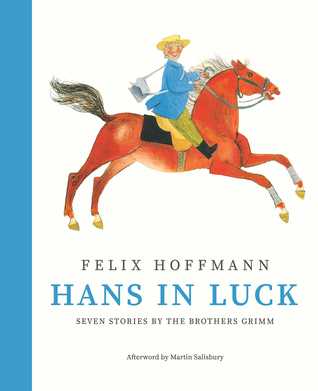
Hans in Luck: Seven Stories by the Brothers Grimm

Hans in Luck: Seven Stories by the Brothers Grimm. Two are retold by Felix Hoffman. Illustrated by Felix Hoffman. 2017. NorthSouth books. 256 pages.

Premise/plot: Hans In Luck is a fairy tale collection featuring seven previously published picture books written and illustrated by Felix Hoffman. Rapunzel was originally published in 1949. The Wolf and the Seven Little Kids was originally published in 1957. Sleeping Beauty was originally published in 1959. The Seven Ravens was originally published in 1962. King Thrushbeard was originally published in 1969. Tom Thumb was originally published in 1972. Hans in Luck was originally published in 1975. Felix Hoffman. The two stories retold by Hoffman are Rapunzel and Hans In Luck.

Felix Hoffman was one of Switzerland's most important children's book illustrators of the twentieth century. The book includes a brief biography and afterword which helps place his work in context. 

My thoughts: I enjoyed reading this collection. My favorite story was Hans in Luck. My next favorite story was probably The Wolf and the Seven Little Kids. I have so many memories of my mom retelling The Wolf and the Seven Little Kids. (She also does an awesome Three Billy Goats Gruff.) I think the only story I wasn't familiar with was King Thrushbeard. It reminded me of The Taming of the Shrew--for better or worse.

Text:  4 out of 5
Illustrations: 3 out of 5
Total: 7 out of 10

© 2018 Becky Laney of Young Readers

Friday, April 27, 2018

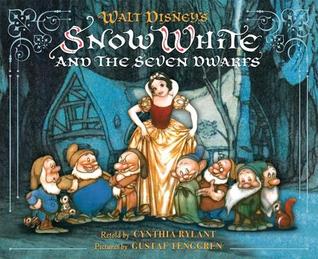
Walt Disney's Snow White and the Seven Dwarfs

Walt Disney's Snow White and the Seven Dwarfs. Cynthia Rylant. Illustrated by Gustaf Tenggren. 2009. Disney. 40 pages. [Source: Library]

First sentence: It is when we are most lost that we sometimes find our truest friends. This is the story of Snow White.

Premise/plot: Cynthia Rylant beautifully retells the fairy tale Snow White and the Seven Dwarfs. It feels silly--beyond silly--to summarize the plot of so familiar a tale. Snow White is forced to take flight after her wicked stepmother tries to have her killed. She finds refuge--even happiness--in the home of the seven dwarfs. She loves them; they love her. But when the magic mirror reveals Snow White is still alive, well, her life is in danger once more. Will the queen's jealousy ever end? Will Snow White get her happily ever ending?

 My thoughts: I LOVED this one. I loved the writing. Rylant did a beautiful job with the story.
But those with an evil heart seem to have a talent for destroying anything beautiful which is about to bloom. So it was that one day the Queen consulted the Magic Mirror, and Snow White's life was forever changed.
 The dwarfs went inside and found Snow White asleep. When she awoke, Snow White told them her story. By the end of the telling, they loved her. How could they not? The Dwarfs had not known gentleness and beauty for a very long time.
Many stories in life have a happy ending, and this is one of them.
I also loved the illustrations by Gustaf Tenggren. Tenggren worked at Disney from 1936 to 1939. The films he worked on include Snow White and the Seven Dwarfs, Pinocchio, and Bambi. But he didn't just work at Disney. He illustrated a LOT of children's books. Books such as The Poky Little Puppy, The Shy Little Kitten, The Saggy Baggy Elephant, The Tawny, Scrawny Lion, Bedtime Stories, Farm Stories, and King Arthur and the Knights Around the Round Table. You can read more about his work here: http://www.gustaftenggren.com/tenggren/default.asp

I didn't grow up watching Snow White and the Seven Dwarfs. It wasn't released on VHS until I was in high school. (The Disney Wiki says October 1994. That sounds about right!) But I did grow up listening to the soundtrack on record. I do have favorites. I love and adore the Silly Song and the Dwarf's Washing Song. And then there's One Song.

Text: 5 out of 5
Illustrations: 4 out of 5
Total: 9 out of 10


© 2018 Becky Laney of Young Readers

Monday, January 8, 2018

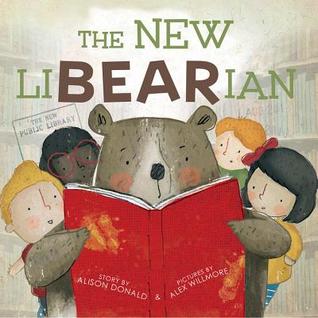
The New LiBEARian

The New LiBEARian. Alison Donald. Illustrated by Alex Willmore. 2018. Houghton Mifflin Harcourt. 32 pages. [Source: Review copy]

First sentence: It was almost story time. The children were ready. Dee couldn't wait. "Isn't it time?" she asked. But no one answered.

Premise/plot: Ms. Merryweather, the children's librarian, is missing. Can the children follow the clues and solve the mystery? They may not discover Ms. Merryweather right away. But they do discover a NEW librarian. One who is willing to read them stories, but not just any stories--stories they're not allowed to read, SCARY stories. Will Ms. Merryweather return? Who is this new librarian?

My thoughts: I really enjoyed this one. The new librarian LOVES to read BEAR stories. Could their new librarian have escaped from a storybook?

Text: 4 out of 5
Illustrations: 4 out of 5
Total: 8 out of 10

© 2018 Becky Laney of Young Readers

Wednesday, November 15, 2017

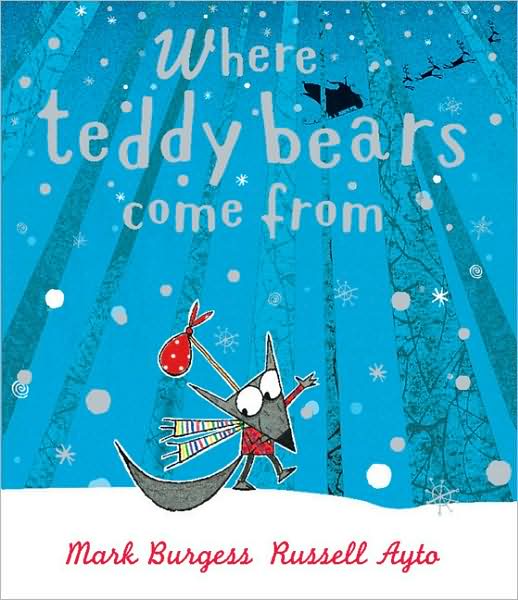
Where Teddy Bears Come From

Where Teddy Bears Come From. Mark Burgess. Illustrated by Russell Ayto. 2009. Peachtree Press. 32 pages. [Source: Review copy]

First sentence: In the middle of a deep, dark forest, all the creatures were fast asleep except for a little gray wolf, who tossed and turned and couldn't sleep a wink.

Premise/plot: Little Wolf is having trouble sleeping. He thinks he may have a solution: a teddy bear. But WHERE DO TEDDY BEARS COME FROM?! He asks his mother first. But when she doesn't know he's off on a quest in the deep, dark forest to ask just about everyone his question. Who will know the answer?!

My thoughts: I really enjoyed this one. I loved all the fairy tale twists and turns. Little Wolf asks The Three Little Pigs, Little Red Riding Hood, Goldilocks, and others his all-important question. Will Little Wolf get his teddy bear?!

Text: 5 out of 5
Illustrations: 3 out of 5
Total: 8 out of 10

© 2017 Becky Laney of Young Readers

Thursday, November 9, 2017

Sleeping Beauty

Sleeping Beauty. Cynthia Rylant. Illustrated by Erin McGuire. 2017. Disney-Hyperion. 40 pages. [Source: Library]

First sentence: Many see Time as a friend, and many see Time as a foe. But for a sleeping beauty, Time was a promise.

Premise/plot: Cynthia Rylant retells the fairy tale, Sleeping Beauty, in a new picture book beautifully illustrated by Erin McGuire. The story is a traditional retelling.

My thoughts: I really loved this one. I don't love the Disney version of Sleeping Beauty, though I do enjoy the use of Tchaikovsky's music. I loved that there wasn't a villain (or villainess) to fight. When the hundred years was over, the Prince came as if by instinct, and the thorns and briars parted to allow him through. He kissed her hand, and she awoke. I loved the ending, "Life returned to the sleeping palace, where happiness had always been waiting. It just took Time." Beautifully stated, right?!?!

Text: 5 out of 5
Illustrations: 4 out of 5
Total: 9 out of 10

© 2017 Becky Laney of Young Readers
Tuesday, September 27, 2011

The Princess and the Pig

The Princess and the Pig. Jonathan Emmett. Illustrated by Poly Bernatene. 2011. Walker. 32 pages.


Not that long ago, in a kingdom not far from here, a farmer was traveling home from the market with a cartload of straw. The farmer was so poor that he didn't have a horse and had to pull his own cart. In the back of the cart lay a tiny pink piglet. Nobody wanted to buy the piglet at the market, but the farmer had taken pity on it. "I'll call you Pigmella," he decided, as this seemed like a good name for a pig.

The Princess and the Pig is a delightful book; one that I just loved and adored! The royal princess, Priscilla, is dropped from the tower--the Queen being so disgusted by the smell coming from the baby's diaper--the baby lands quite safely in the farmer's cart. The pig goes up, up, up in the air and lands in the baby's cradle. Because EVERYONE in the kingdom seems to read the right kinds of books--the kinds of books with fairies--good and bad--the kinds of books where the unexpected happens all the time--it's assumed by all that a bad fairy has turned the princess into a pig and a good fairy has turned the pig into a baby girl because she knew that the farmer and his wife are good, hardworking people who haven't been able to have a child of their own all these years.

So the story of course follows both the princess and the pig through the years...and it's quite an entertaining read!!! Very satisfying I must say!!!

It's a great story, very fun, very delightful! Loved all the details! Loved the highlighting of all the books. I'd definitely recommend this one!

Text: 5 out of 5
Illustrations: 5 out of 5
Total: 10 out of 10

© 2011 Becky Laney of Young Readers

Saturday, January 15, 2011

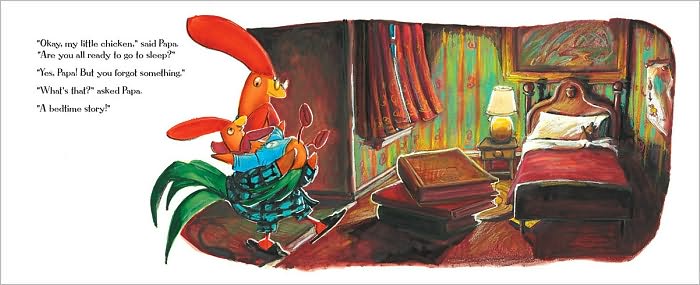
Interrupting Chicken


Interrupting Chicken. David Ezra Stein. 2010. [August 2010] Candlewick Press. 40 pages. 

It was bedtime for the little red chicken.
"Okay, my little chicken," said Papa. "Are you all ready to go to sleep?"
"Yes, Papa! But you forgot something."
"What's that?" asked Papa.
"A bedtime story!"

I loved this one. I just LOVED this one. It's funny. It's sweet. It's just right in all the right ways. Papa is happy to read a story--or two or three--to his little chicken. But. He does wish she wouldn't interrupt him while he reads. What kind of interruptions are we talking about? Well, Little Chicken just *has* to warn Hansel and Gretel that the old woman with a candy house is a witch. And then there's the warning to Little Red Riding Hood about talking to strangers. And, of course, the warning to Chicken Little telling him NOT to panic--it was just an acorn. With each abbreviated fairy story, Little Chicken is failing to get even a little sleepy. Will Papa ever get his little one to bed? Then they get an idea! What if Little Chicken were to tell a story to Papa?! Would that make her sleepy?!


As I said, I LOVED this one. I liked the fairy tale theme. I liked the storytelling theme. It was a clever book that is beautifully illustrated.

© 2011 Becky Laney of Young Readers

Saturday, September 25, 2010

Clever Jack Takes The Cake


Clever Jack Takes the Cake. Candace Fleming. Illustrated by G. Brian Karas. 2010. August 2010. Random House. 40 pages.

One summer morning long ago, a poor boy named Jack found an invitation slipped beneath his cottage door. It read:
His Majesty the King
cordially invites
all the children of the Realm
to
the Princess's Tenth Birthday
Party
tomorrow afternoon
in the Castle Courtyard.
I really enjoyed Candace Fleming's Clever Jack Takes The Cake. Jack, a poor boy, is embarrassed that he doesn't have a gift worthy enough to give a princess. But. He's not discouraged from attending. And he's not discouraged from trying to do his best. No, he's determined. He decides that he will make her something--a cake. When he leaves home, it is with a fine cake:
two layers of golden-sweet cake covered in buttery frosting and ringed with ten tiny candles. Across the cake's top, walnuts spelled out "Happy Birthday, Princess." And in the very center--in the place of honor--sat the succulent strawberry.
But his journey to the Castle Courtyard isn't without risk or peril. Will Jack and his fine, fine cake make it to the party? What will the princess think of Jack and his gift?

I really enjoyed this one. I liked Jack. I liked the Princess. I liked the storytelling. It is a story. (So expect a good amount of text per page.) But it's a good story. One that would be great to share with others.


© Becky Laney of Young Readers

Saturday, May 29, 2010

Cinderella


Cinderella. Max Eilenberg. Illustrated by Niamh Sharkey. 2008. Candlewick Press. 56 pages.

Once upon a time there lived a girl whose mother--the kindest mother in all the world--had died and whose father had married again. The wedding had barely ended before the new wife began to reveal her true nature. She was snobbish, mean, and foul-tempered. Ooh, she was horrid. And she was especially cruel to the girl, whose beauty made her own two daughters look positively hideous. the stepmother couldn't stand this.

I really enjoyed this retelling of Cinderella. I liked many things about it. I liked the way it was told. (I loved the parenthetical commentary, for example.) I liked the fact that there was more than one ball. I really, really loved that. It was the third ball, in fact, where Cinderella lost her glass slipper. I liked the fact that Cinderella's father wasn't dead--he was just weak and enchanted (in a way). That it was with a little help from him that she was able to "win" her Prince in the end.

I really enjoyed the illustrations. I thought they complemented the text perfectly.

© Becky Laney of Young Readers
Sunday, May 2, 2010

Mirror, Mirror


Mirror Mirror: A Book of Reversible Verse. Marilyn Singer. Illustrated by Josee Masse. 2010. Penguin. March 2010. 32 pages.

I loved this book of poetry! I did. If you like fairy tales, you should definitely pick this one up. Because this book of reversible poetry does a great job at twisting some familiar tales. Each poem can be read up and down. This is also a great collection for highlighting different points of view. So "In the Hood" tells Little Red Riding Hood's story when you read one way, but tells the Wolf's story the other way! That poem is without a doubt my favorite from this collection! Other fairy tales treated include Cinderella, Sleeping Beauty, Snow White, Beauty and The Beast, Hansel and Gretel, The Ugly Duckling, Jack and the Beanstalk, The Three Bears. (Just to name a handful.)

Here is "Longing for Beauty"

A beast
can love
beauty.
A moist muzzle
can welcome
a rose.
A hairy ear
can prize
a nightingale singing.
Beneath fur,
look!
A soft heart
stirs,
longing.

Longing
stirs
a soft heart.
Look
beneath fur.
A nightingale singing
can prize
a hairy ear.
A rose
can welcome
a moist muzzle.
Beauty
can love
a Beast.

I really enjoyed the illustrations. They're bright, colorful, and engaging. (You can see examples of the art here. You can also read "In The Hood" there.)

Other reviews: A Year of Reading, Writing and Ruminating,

© Becky Laney of Young Readers

Sunday, January 3, 2010

Where Teddy Bears Come From


Burgess, Mark. 2009. Where Teddy Bears Come From. Illustrated by Russell Ayto. Peachtree Press. 32 pages.

In the middle of a deep, dark forest, all the creatures were fast asleep except for a little gray wolf, who tossed and turned and couldn't sleep a wink.

I *really* meant to have this one reviewed for Christmas. I read it. I shared it with a couple of friends. I talked about it with my family. But. It didn't get reviewed in time. Instead of pushing it completely aside, I thought I would go ahead and review it now.

What is this one about? And why should you read it? Why should you make it a part of your holiday season next year? It's about a little wolf who has trouble sleeping. He realizes after hearing a couple of bedtime stories that maybe-just-maybe having a teddy bear could help him out, help him to settle down and sleep peacefully. So he asks his mom where teddy bears come from. She sends him on a journey, a quest. She sends him to the Wise Owl who knows everything. And the Wise Owl sends him...well, I won't tell you just where he goes and who he sees...Will this wolf's quest end in success?

I really enjoyed this one because it has plenty of twists. Of course, if I tell you about those twists now, it would spoil your fun in discovering this one on your own. But trust me, it's a fun, fun story.

© Becky Laney of Young Readers
Tuesday, November 17, 2009

Yummy: Eight Favorite Fairy Tales


Cousins, Lucy. 2009. Yummy: Eight Favorite Fairy Tales. Candlewick Press. 121 pages.

Lucy Cousins (perhaps best known for her Maisy books) brings us eight (familiar) tales in this bright and bold collection for young readers. The tales included are: Little Red Riding Hood, The Three Billy Goats Gruff, The Enormous Turnip, Henny Penny, Goldilocks and the Three Bears, The Little Red Hen, The Three Little Pigs, and The Musicians of Bremen. (I only wish she'd chosen to include The Gingerbread Boy.)

Cousins' stories are a bit more violent than some contemporary retellings. She doesn't shy away from death and violence. (Though not each tale is violent. It's really just Little Red Riding Hood and The Three Little Pigs that are. Her wolves are definitely in the big and bad category.)

The text of each story is simple and straightforward.

Once upon a time, there was a girl named Little Red Riding Hood. Her mother asked her to take a basket of food through the woods to her grandmother, who was ill. Little Red Riding Hood had not gone far when she met a wolf.
What did I like best about this one? The illustrations! If you like Cousins' bright, bold, and colorful and larger-than-life (almost) illustrations. (Illustrations that command your attention right from the start.) Then you'll appreciate this collection of stories.

This is another impressive title by Candlewick Press.

© Becky Laney of Young Readers

Friday, August 7, 2009

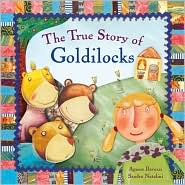
The True Story of Goldilocks


Baruzzi, Agnese. 2009. The True Story of Goldilocks. Illustrated by Sandro Natalini. Candlewick Press. (August 2009)

What I liked best about this one was the fact that it was a pop-up book. (Well, partly a pop-up book. It's definitely more in the interactive family of books than not. With flaps to open, wheels to turn, and a page or two that pops.) Are you curious about this so-called "true story?"

In this version, Goldilocks is beloved of Mama and Papa bear. Well, mostly. She's a good child, well-behaved. Baby Bear is a different story. He's a brat. End of story. Goldilocks to set out to reform him, to teach him some manners. But in the end, she learns something from Baby Bear as well...how to be a brat.

While fractured fairy tales are nothing new, they can be great fun every now and then.

© Becky Laney of Young Readers

Thursday, August 6, 2009

The True Story of Little Red Riding Hood


Baruzzi, Agnese. 2009. The True Story of Little Red Riding Hood. Illustrated by Sandro Natalini. Candlewick Press.

Little Red Riding Hood is used to being popular--the nicest person in the forest. But all that changes when she gives lessons to the Big Bad Wolf. He writes her a letter--very sincere, but containing many misspellings--begging her to help him out. He wants to reform. So the lessons begin. And they work! They really work. But now that he has what he wants, Little Red gets mighty jealous! Can she un-reform this big baddie?

This fractured fairy tale is fun.

© Becky Laney of Young Readers